Showing posts with label interactive narrative. Show all posts

Wednesday, November 9, 2011

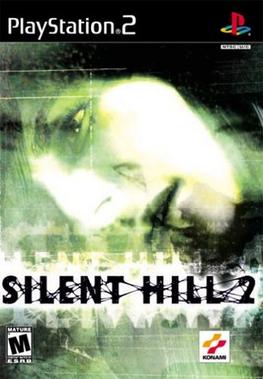
Review: Silent Hill 2


This is a horror classic that I only recently got the chance to play.  I went into it with high expectations; the only other horror game I've seen consistently put on the same level as Silent Hill 2 is Fatal Frame, which to this day is the most terrifying experience of my life.  Seriously, the night my cousin and I played it through, we drank tons of Mountain Dew Game Fuel, and now whenever I so much as smell the stuff I have flashbacks.  *shiver*

But anyway, you can see how that would set up some powerful expectations.  The result? Mixed, but overall highly positive.

Don't get me wrong; I loved Silent Hill 2.  It's one of the more psychologically interesting interactive narratives I've seen in a long while, the type of experience you could discuss with a friend for hours just about different interpretations (I certainly did).  I am in no way saying it was disappointing, it simply delivered an incredible experience in a way I wasn't quite anticipating.

The Silent Hill series in general is more about a general concept than a cohesive narrative; a person with some intense inner demons is drawn to this town, where they are attacked by monsters and put through trials that will either break them or, if they get through it, get them past their problems.  So in this one, James Sunderland goes to Silent Hill after getting a letter from his wife, Mary, telling him to meet her there. Considering his wife has been dead for three years, he goes to see what is going on.  Upon getting there, he gets attacked by a strange, bloody monster, meets a few other people who seem just as confused as he is, and finds a woman named Maria who looks exactly like his wife.  And that's all before encountering the strange, pyramid-headed being who just doesn't seem to die.

The gameplay and general design is certainly dated in some ways; this was early in the days of the Playstation 2, after all.  The camera can be a pain, but that's somewhat to be expected of games from this era.  The combat is woefully simple and slow, and while that's partially intentional (to instill a sense of powerlessness and fear), even just mapping the downward strike to another button would have done a world of good toward less frustration with the controls.  The fearful effect of the sluggish combat is achieved, but it definitely could have been done with better design so it feels more powerless than frustrating.

Get used to this; these hallways make up most of the game.
The level design also didn't evolve much from the first one.  The most open you'll almost ever get in this game is running through the streets between buildings; most of the game takes place in narrow hallways and small rooms, and while such claustrophobic spaces can be nerve-wracking, it gets a bit old after a while. There is still dense fog as well, but as has been noted by many critics, this is both to make up for hardware limitations and to obscure vision for the sake of a more effectively fearful atmosphere, and it certainly doesn't hurt.  All in all, the basic gameplay is functional if very much imperfect, and many of its weaknesses can be shrugged off under the excuse that the PS2's hardware was still relatively new at the time.

There are also many puzzles, which can tend to be a bit unintuitive.  At first it was difficult because the game expects you to search everywhere before finding a solution, scattering clues and necessary items all over a given area for you to find.  This can be kind of annoying, especially given the difficulty one may have in spotting these items amongst the largely samey environments (I even managed to miss an important, though thankfully not vital, weapon along the way), but once you get used to searching everywhere, it's not much of an issue.  What remains a source of irritation are the often downright strange puzzle solutions.

For instance, in an early building there is a bundle of trash stuck in a garbage chute.  You know it's important because the game pointed it out (I have no idea why James would take notice of this), but you need to get it out somehow.  Among other things in this building, you find a pack of canned fruit.  It seems useless, but the game expects you to logically deduce that you can drop this heavy item down the chute, therefore pushing the stuck garbage bag down as well.  It does make logical sense, and perhaps that reasoning would work in a game that gives you many different ways to go about things, but in a game that only ever gives you items if there's a practical use for them, this kind of puzzle can be rather frustrating.

In this one, the player must combine a random string of
hair and a bent needle to pull the object out.  
That said, all of these elements are perfectly functional, just highly imperfect.  They will get annoying at times, but rarely infuriating, and they always work well enough to carry the game forward.  But really, none of these things are the draw for Silent Hill 2.  There are two things that make this a worthwhile experience: atmosphere and story.

In regards to atmosphere, the game simply does a good job of setting up a general aura of dread and fear.  The fog outside keeps you constantly guessing as to what's ahead of you.  The cramped spaces promise little ability to maneuver or escape.  You have a radio that emits static when an enemy is nearby (but not necessarily visible), and this never fails to make a stressful situation far more tense.  And each appearance of Pyramid Head reminds you that you're not on the offensive in the slightest; you're being hunted, and surviving is all you can really hope to do.

Ultimately, the game fails to scare on the same level as some other horror games due to its relative lack of singular events and terrifying set pieces. One of the most unsettling moments in the first Silent Hill for me was when a room had an empty bird cage, and yet one could hear frantic fluttering, as though a bird were trapped inside and desperately trying to escape.  Most great horror games have things like this; not necessarily jump scares, but singular events or set pieces that increase the tension within a particular location or situation.  However, this is far from a condemnation for the game's value as a horror piece, it's just that most of it is more psychologically disturbing than outwardly scary.

The story is the main aspect of Silent Hill 2 that makes the whole experience worthwhile.  The summary given at the beginning of this review is certainly not a full representation of what this story has to offer (as is common for video games with good stories), but I will try to say what is so special about it without giving any real spoilers away.

It's no secret that Silent Hill 2 has multiple endings.  What's a slightly lesser-known fact (though still hardly a secret) is that these endings are not based on specific, blatant actions or choices as they are in most games. Rather, this game has a way of judging you on a deeper level based on actions you may not even realize you're making.  For instance, the bad ending bases itself partially on whether you run around at low health instead of healing immediately; caring so little for your survival can lead to a bad ending. Similarly, the role Maria plays in the story will depend on how well you protect her in gameplay, whether you accidentally hit her, and whether you regularly visit her while she's resting in a particular room.  There are no gameplay prompts, no indication that any of these things matter or can even be done; how the story turns out is entirely up to your play style and the nature of your connection to the characters and events.

This gets far more interesting when you begin to fully understand the nature of James' interaction with the other characters in the story.  Though an "all in his head" theory for the story is very debatable, it is very clear that the other people in the town of Silent Hill represent a specific part of James' psychology in light of the backstory revealed near the end of the game. Things such as self-hatred, the ability to love, violence toward others, and denial are all represented in the story, and the way James interacts with these characters is part of what determines the ending.

The cool thing about this is that Silent Hill 2 has no canonical ending.  Even in future entries in the series, which attempt to bind the series together into a more cohesive story, James' fate is left ambiguous.  In a way, Silent Hill 2 is less of a narrative and more of a story-driven psychological exploration; a parable with a moral that changes depending on how you play the game.  Your experience with Silent Hill 2 could make it a cautionary tale for a number of reasons or a story of triumph over inner demons, all depending not on forced moral choices or a blatant good/evil paradigm, but on many different little details about how you played and what you valued in-game.

This is why Silent Hill 2 is such a great experience.  The game is functional on all basic levels, far from perfect on most of them, but so enthralling from a narrative perspective that it absolutely deserves to be played.

Saturday, October 29, 2011

"Growing Out" of Video Games


This topic isn't specifically about video games as a narrative art form, but it is certainly related to it.  This is a topic that has come up rather often, both in my life and in the lives of many other gamers I know, and it's one that really has to be dealt with as a cultural misconception.

We live in a culture that regards video games as toys.  In a way, this is actually correct; it would be difficult to refute that the nature of a video game falls, to a large degree, under the definition of a toy.

Source: www.usaopoly.com
Breaking away from the specific consideration of video games for a moment, if one goes to a toy store, there will be a whole section devoted to board games, card games, and other tabletop games of similar nature.  There will probably be another area that, while not as comprehensive as an actual sporting goods store, will have basic supplies for sports, such as balls, bats, racquets, and the like. While some games are certainly valued as more than that (no sports fan, for instance, would regard the Superbowl or the World Cup as a bunch of guys playing with a toy ball), games, as a general principle, are regarded in our culture as toys.  In any case, the two are hardly mutually exclusive.

There's nothing wrong with that, of course.  Play is a very important aspect of the human experience, for personal and psychological reasons as well as social ones, and that is generally reflected in our culture.  But the personal value of toys is generally considered important only in that it provides a break from the stresses of life, something that, while important, has little or no value outside of that function.  Even despite the supposed value of hobbies, if an adult's hobby is playing with or collecting some kind of toy, this is often something of a social mark of shame.  In short, our culture sees little or no value in toys outside of social value and occasional (but certainly not regular) escapism.  Because of this, it is expected that one is to gradually cease playing with toys as they grow older, replacing their former liesure with work and other productive activities.

This is not so with art.  Even when a given medium is viewed solely as entertainment, there is usually more value ascribed to them.  Reading is encouraged from childhood, and no one scoffs at an adult cracking open a copy of To Kill a Mockingbird.  The same can be said of movies, though in a bit of a different way; people rarely recognize the same level of artistic value in film as in literature, but it is certainly understood, and watching movies is still a socially acceptable pastime for an adult.  And music, of course, is acceptable for any age to enjoy without accusations of immaturity or irresponsibility.

Source: Wikipedia
Well, depending on the music.

Obviously, this site is dedicated to the idea that video games are an incredible artistic medium, so I'm not going to use this space to make the argument that video games' toy-like nature is irrelevant to their artistic status; that fact is assumed.  I'll save it for a later Counterpoint article, but for now we're simply operating under the assumption that this combination of a toy and an artwork does have value as an artwork.

The question then arises, is it possible for one to "grow out" of video games?  Is the entire medium something that one should lose interest in as they grow up and the responsibilities of adulthood force out such frivolous activities?

There is an extent to which I can see this happening, in certain situations at least.  The fact is that video games are more time-consuming than most other narrative media, and since the medium is hardly renown for its artistic value (however unfortunate that may be), a lot of the game-playing that goes on is strictly recreational.  So it's understandable that someone who is only playing for fun would slowly have video games fade from their life as they choose to focus on different things with both their careers and free time, until the only time they really have to play games is with friends or family.

However, this does not amount to video games being something that an adult must cast off in favor of more meaningful activities, because video games, like every other artistic medium, are not without meaning. Not by a long shot.

Essentially what we have is a cultural double standard based on misinformation as to the nature of video games as a medium; society at large still views video games as toys, and does not acknowledge the artistic value inherent in the medium and strongly present in many of its artworks.  As a result, it's expected that, like other toys, they should simply stop getting so much attention as people grow older.  But this is not how it works, nor how it should work, because that is not what video games are.

In the end, we are talking about an artistic medium here.  Excessive playing should, of course, be looked down upon.  That's just common sense, as it is with any other object, medium, or pastime.  But the very playing of video games, or even a focus on them, is something that should be perfectly acceptable in an adult, because these are not simply toys, but artworks, with the same value, potential, and beauty that term implies.

Just something to keep in mind, and perhaps to encourage fellow gamers; I doubt I'm the only one who's gotten this line before.  Valuing video games does not make us immature children, it simply makes us members of society who enjoy a particular form of artistic media.  And in a few decades, young children will gawk at the fact that we were alive for its inception, and the classic works of the medium will be studied in college courses.

Well, a gamer can dream; but it's far from impossible.

Tuesday, October 25, 2011

Absence

I apologize to anyone who may be reading for the long period of time in which I have not published an article.  I've had a lot of ideas swimming around in my head, but not the time to really incarnate them into full articles.  I've gotten a few going, though, so this Saturday will mark a new wave that can manage a weekly schedule for at least a while.

The upcoming article is about the expectation to grow out of video games as we grow older.  As you might expect, I don't take too kindly to that notion; come back on Saturday to see why.

Saturday, September 17, 2011

Adaptation: From Non-Interactive to Interactive Part 1


Adaptation to video games from other mediums has always been an... interesting venture.  I really do think, as I said in a previous article, that a lot of the failure of game-to-film adaptations comes from a lack of artistic respect for the source material, but I'm not sure the same can be said of the adaptation from a non-interactive medium to video games.  Let's see if we can figure out what makes this so difficult.

Firstly, let's get this out of the way; yes, most games based on movies are shameless cash grabs.  I'm not sure the same can be said of other source mediums (mainly because video games based on books or stageplays are rare, to say the least), but film certainly tends to get the most adaptations and the vast majority of these are simply a hope to cash in more on the film's license.  A rare few of these have been lucky enough to be handed to good directors (such as Michel Ancel's King Kong), or sometimes simply succeeding based on unoriginal but solid construction (such as the Lord of the Rings movie tie-in games), but usually they are uninspired and poorly-made simply because the developer is not trying to adapt, but simply to cash in.

However, that's not something to get caught up on.  There are genuine difficulties and problems when it comes to adapting a work into interactive media, and they are important to understand and solve.

Really, this mostly comes down to a single, large issue that envelops almost all the problems with interactive adaptation; developers, if you're making a game based on another story, tell the freaking story.  Far too many game adaptations take the easy road by bridging awkwardly-shoehorned-in action sequences with a couple lines of dialogue, then moving to the next, and that simply doesn't cut it.

Pictured: the worst offender I've ever seen.  Even more annoying
considering the source material is famous for its long monologues.
Developers, it's obvious from the fact that you had to add action scenes that you're familiar with games' more constant need for interactivity.  Which means you should also be familiar with the fact that not every scene in a movie is an action scene.  Which also means you should be able to figure out that those scenes with all the talking in the movies are kind of important to the story.  Cut them out, and you have nothing more than a string of loosely-connected action scenes.

Otherwise known as a Michael Bay film.
As I noted from my experience with inFamous, it is a lot more difficult to do character development in a video game than it is to do plot development.  Especially over this last generation of games, we've had Cortana explaining the plot to us as we play, audio diaries describing the ruin of Rapture, and Captain Price yelling at us on the radio about where to go next.  And though some of a character's personality can be communicated through this method, a story suffers from having no time fully dedicated to character development.  But in an action-oriented video game, that's not very easy.

The most obvious solution is to just make cutscenes.  And that's fine; not exactly progressive, but I think I've made it clear that there's nothing wrong with telling your story through cutscenes, especially since that would really be the easiest way to tell a story that wasn't interactive in the first place.

Besides, Hideo Kojima does that more than you ever could,
and his games are revered.
Outside of that though, there really is room for creativity.  Remember when I talked about major and minor narrative interaction?  Minor interaction is effective and relatively easy to insert in a linear story since emotional impact is heightened without changing the events of the source material.  For instance, simply taking that supporting character's death in the third act and making it happen while the player was under a time limit to reach him/her would intensely magnify the sense of responsibility, guilt, and sadness an invested player feels.

Specifically back to the question of character development and non-action scenes, however, we run into the most difficult problem to overcome; player choice.  Perhaps, one might think, dialogue systems like that of Mass Effect could give the player a way to interact with dialogue-heavy scenes and even help give the player a say in the story's events, but dialogue systems like that are boring and pointless if the player doesn't have some amount of control over the events of the story.

Minor changes are no big deal, but the ability to decide the character's morality, or the ability to make story-changing decisions like in Mass Effect, simply could not coexist with a story that is preset on a certain path.

But this does not mean all player interaction with the events of the story is impossible.  However, the best way to learn is through example, and this article is already pretty long, so next week there will be a discussion about working around this issue using the example of Shakespeare's Henry V.  Yeah, I'm going there.  Come back next week to see how it turns out, and in the meantime make sure to like Binary Narrative on Facebook!

Saturday, September 10, 2011

Format Change


Okay, here's what this is coming down to.  I set up a weekly publishing schedule in hopes that I could keep a steady stream of articles coming for people to consider and discuss.  As it turns out, however, the amount of people actually seeing said articles is disappointingly low, and I can't keep up the weekly workload for the few people that may be reading this blog regularly.  As a result, I am going to need to move to a more lax schedule.  This disappoints me, as one of my annoyances with many internet personalities and such is the tendency to often be late or even wait weeks or months between entries.  I hopefully won't get quite that bad, but I simply don't have time to write weekly articles if they will not actually be read.

I apologize to any regular readers I may have, if in fact you do exist.  If you disagree with this decision, feel free to let me know in the comments or by way of the email at the bottom of the page, but as of now this blog simply is not achieving the goal I had envisioned, and I can't afford to put that much time and work into something no one is reading.  I will hopefully have something for you soon.

Wednesday, August 31, 2011

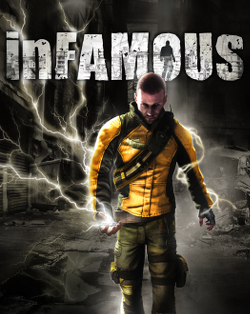
inFamous

Sorry for the lack of article on Saturday; my last semester of college just started, and things have been a bit crazy.

Finally got around to playing inFamous.  I got it during the Welcome Back program and I've been playing other games since then, so I'm just now playing it.  And I am enjoying it quite a bit.

It's unpolished in a way one would expect of a game so ambitious and relatively old in the context of the PS3's life cycle.  My favorite glitch thus far was in the first sewer area when you heal a man, a woman opens the gate and comes through, then the man drops to his knees and yells about how awful life is while the woman looks like she's running, but she's just moving slightly next to the suffering man.  It looked like she was doing some sort of happy dance while this guy screamed in anguish.  I laughed.

From a storytelling perspective, it's an interesting experience in that it seems to put no real effort into character development, but sometimes it seems like it really wants to.  We see some development in Zeke, but only in a few specific little areas.  Cole's girlfriend seems to basically be a non-character, more of a plot device to motivate Cole and offer some quests than an actual character, and yet I think it was supposed to be a really happy moment when she forgives Cole for what happened (it happened like halfway through the game and was more than a little obvious, or I would have warned for spoilers).

This is the most common problem to plague gaming as a narrative medium; it doesn't want to take any more time than necessary to develop the narrative elements.  It'll try to do a good job communicating the plot, but characters take a long time to develop, and that can't be done in gameplay to the same extent that plot can, so in order to preserve the all-too-common "all action and gameplay, all the time" mindset, they develop the plot but don't give the characters their due attention.  Perhaps I'll write a full article on that at some point, but for now it's just an interesting thing I noticed in inFamous.

Wednesday, August 17, 2011

Minor Narrative Interaction

As promised in my last post, here are a few games I recommend to see good use of Minor Narrative Interaction.  Some are obvious, and some less so.  These games make good use of interactivity without making the entire story hinge on the interactive elements and the player's input, and they do a very good job of increasing emotional impact and character empathy through these techniques (though for the sake of spoilers, I won't describe exactly how).  There are more that belong on this list, of course, but these are some particularly good examples.  If you feel there is another game that should have been included, feel free to say why in the comments!

Bioshock
If you're interested in games as a narrative art enough to be reading this blog in the first place, you probably know what I'm talking about.  Bioshock has not only a fantastic twist in the story, but it presents said twist in a unique way that not only emotionally involves the player through excellent use of minor narrative interaction, but hammers the point home like a railway spike straight to your intellect.  A truly brilliant moment in a truly brilliant game that must be experienced.

Beyond Good and Evil
The final boss fight of this game is one of the best examples I've seen of symbolism in actual gameplay.  The controls during the final battle very accurately reflect the struggles of the protagonist and her state of mind at the time in a rather brilliant way.  It's rare to see a game play with the controls to give meaning to even the game's basic control scheme.

Final Fantasy X
I mentioned this in the actual article.  Final Fantasy has a bit of a reputation among some for not involving interactivity at all, for just being long stretches of gameplay punctuated by cutscenes.  For one, that's not true.  Secondly, there's no reason those stretches of gameplay can't be great examples of minor narrative interaction.  This game takes a normal gameplay sequence and, through emotional music and the weight of responsibility on the player, makes the entire process a battle within you between the desire to leave and the need, from both the game and the story, to continue on.

Shadow of the Colossus
The death of a colossus in this game is not a triumphant or exciting experience.  The battle is epic and exhilarating  but once you have killed them, the magnificent beast falls to the ground, life pouring from it, as tragically beautiful music plays.  It's a beautiful moment that evokes more sorrow than triumph.  Seems kind of weird, seeing as killing these colossi are the key to reviving your dead loved one.  But it will all make sense in the emotional ending, in which your efforts certainly make the scene more impacting than yelling at an onscreen character ever could.

Friday, August 12, 2011

Major and Minor Narrative Interaction


These concepts are hardly new, but much like the Narrative/Gameplay Paradigm, this article is my attempt to label and define these two concepts and explore how they work.

It's important to keep in mind that the dramatic story-altering forms of interactivity employed by developers such as Bethesda and Bioware are not the only way to use interactivity in meaningful ways.  It's great to be able to shape the entirety of the story's protagonist, or determine the course of events as the story progresses, but it would be a mistake to think that is the only way for video games to convey their narrative through the unique lens of interactivity.

I'm going to separate interactive storytelling techniques into two categories; there could be many more, obviously, but as a first step let's keep it simple.

The first is major narrative interaction.  This is interactivity on a major scale, the kind of interactivity that allows the player to have a large impact on the game's characters, story, and world.  When you make a decision in Mass Effect that carries over to its sequel and affects its events, that is an instance of major narrative interaction.  This kind of interactivity focuses on letting the player have control and putting the story and characters in their hands.  The player is allowed to choose the type of experience they want based on the options given them by the developer.

The second category is minor narrative interaction.  This is the more subtle use of interactivity, the one that doesn't have any real effect on the story or characters of a given game.  This is what's used at the end of Shadow of the Colossus, the end of Halo: Reach, the plot twist in Bioshock, the final walk to Zanarkand in Final Fantasy X, and the nuclear bomb in Call of Duty 4: Modern Warfare.  Most examples are rather spoileriffic, so I can't describe specific examples without ruining some truly amazing moments, but hopefully you be familiar with at least one of the moments I named.  The basic idea of these is that they put the player in control for an important story point that will not change based on the player's interaction, but the emotional impact and even the story's main points are hammered home in a way that cannot be accomplished without that interactive element.

Major narrative interaction is often the only recognized form of interactive storytelling.  Understandably, the most thrilling potential for interactive narrative is the ability for the player to actively help shape the story and characters, to make important decisions that could take the story in different directions.  The involvement of the player in the artistic experience is an important and exciting development in the arts, and we rightfully have a desire to explore it to its furthest potential.

However, it is important that we not overlook the importance of minor narrative interaction.  This type of interaction does not allow the player to shape the story, at least not in any huge way, but rather endeavors to quite literally put the player in the place of the protagonist, to walk a mile in their shoes so to speak.  In well-crafted uses of minor narrative interaction, the player's actions (or lack of ability to interact in a certain way) reflect the struggle of the protagonist in a way that increases the player's sympathy and emotional connection to the character and events.

It sure added a lot to Crisis Core.  No Final Fantasy VII
fan kept dry eyes at the end of this game.  
A classic example of minor character interaction is at the end of a story, often a prequel starring a different character, when they have their last stand.  Enemies pour in from all sides, and more come no matter how many you kill, until eventually your character is overpowered and falls in battle.  This concept is far from new; it has happened in all sorts of stories.  But there's something different about playing it and actually experiencing that lack of control.  You can fight all you like, kill as many enemies as you want.  You could be the best player in the known world, and you will eventually lose.  Despite all you've been through, all the good your character has done in the game's world and story, it comes to an end here, and you can't do anything about it despite your best efforts.

Some games have also made your character, under the control of some unknown force, do something neither they nor you want them to do, and whatever buttons you press, they only bring the character closer to this action, never stopping them.  Or perhaps rather than putting the death of the final boss after your epic boss fight in a cutscene, the game allows you to deliver the final blow yourself.  Some games have even forced the player to do or watch terrible things, such as the controversial No Russian level in Modern Warfare 2.  These are seemingly small touches, but they really add a lot to the emotional impact; the player feels a sense of responsibility when this interaction is present, and for them to fail when in control, even if the game allows no other course of action, is a far more emotional experience than seeing a character fail in a story.

I've often seen people consider major narrative interaction to be the only type of interaction that truly separates video games from other media.  But as important as major narrative interaction is, it is not the only important or even the most important type of interaction when it comes to interactive storytelling.  Major narrative interaction is great, and very important, but it requires a large financial commitment, a lot of manpower, and the type of story that lends itself to multiple branching paths.  Minor narrative interaction, on the other hand, is not only easier on the workers and the money, but can also apply to every type of narrative imaginable.  This is because it does not demand non-linearity, but instead works to achieve heightened emotional impact regardless of whether the narrative branches.

In short, it's important to consider both major and minor narrative interaction when studying a given work of interactive art.  Too often a game is condemned for having no real interactive value simply because of its lack of major narrative interaction, despite having a strong presence of minor narrative interaction, and recognition of both types is vital to truly understanding how interactivity and story work together in this medium.

On Wednesday I'll post a list of games I recommend checking out to see good examples of minor narrative interaction.  I imagine some people will agree and some will disagree with what I'm saying here, so feel free to comment and let me know!  Until then, remember to like Binary Narrative on Facebook if you like what I have to say!

Saturday, August 6, 2011

Adaptation: From Interactive to Non-Interactive


Apologies for the late posting time; had a bit of a pet-related emergency that took a lot of time and induced a lot of stress.  But now it's up, and I hope you enjoy it.

Many gamers have given up on movies based on video games.  All we've gotten from the practice are a ton of horrible movies and one absolutely awful director, and the few decent films we have gotten weren't terrible, but also weren't actually adaptations of the game, just similar stories with the same name.  

Unfortunately, a common reaction to this fact (and every time a film adaptation of a game is announced) is to exclaim that there will never be a good video game movie because, based on past failures, it's impossible to make one.  However, if you'll allow me to be quite frank, that's stupid.  This is art, dependent on nothing more than a skillful depiction of our own creativity; some things may be difficult, but nothing is impossible.

Artistic sensibilities aside, there are identifiable reasons why these films have not worked, which always means it is possible to improve.  If you can identify the problems, you can work on solutions.  So let's see about identifying some of them.  

If you've played Diablo,
you'll get this picture.
First of all, the interesting thing about adaptation when it comes to video games is that there is an interactive component that must be dealt with.  In the past, all a film adaptation had to deal with was the translation of words into images, or from the single-perspective staging of theater into the multi-angle setup the medium allows.  Granted, these were not easy; each medium has unique properties that others are hard-pressed to incorporate, or sometimes downright impossible.  But none of these elements have ever been so vital to the work as interactivity can be.  It is difficult to portray the words of a book with moving pictures, and it is hard work to accurately adapt the works of Shakespeare to a filmic medium, but at least it can be done.  Interactivity, on the other hand, simply does not exist (at least in any meaningful way) outside of video games.  

This was a compelling choice, but much more so when you
had to make it than it would be if Ethan did it himself.
Now of course for most games, the only effect this has is that which I discussed last week, which really isn't a huge hurdle to overcome.  Interactivity inherently connects the player with their characters in a way passive media does not, but we all know that connection is not required to create a compelling, personally identifiable character; we can all name many characters from film, literature, or theater we are far more connected to than many characters I could also name from video games.  And the fact is, none of the game-based films have had to contend with this much; very few, if any, of the games that have been adapted even had multiple endings, let alone the complex and multifaceted choices found in games like Mass Effect or Heavy Rain.  So really, though this is a problem, it has rarely been confronted, so there is not much to talk about.  

My one recommendation with this is to be creative.  Look at Clannad: the game's main romance has two endings, and the good one is unlocked when you play through all the game's different romance arcs.  The anime based on it (which I highly recommend as long as you don't mind crying like a baby), rather than choosing the good one as canonical, manages to fit both in.  The result is, unfortunately, less than perfect; I had to look up the ending online after watching it to fully understand it.  But it was a valiant effort.  The point is simply that, while interactivity cannot really be a part of film, that does not mean complete linearity is the only option.  Be creative.

However, on to the problems that have been more relevant to video game movies thus far.  The most obvious is that there is yet to be any real talent put into them.  Sure, there will be some noteworthy actors here and there, and it's true that not every director is as bad as Uwe Boll, but in general video games just haven't gotten the same talent behind their movies that literature and theater have.  Thankfully, this one will likely change over time; we live in a world where Kenneth Branagh, famous for directing and acting in Shakespearian film adaptations, directed Thor, a movie based on a Marvel comic.  Considering the parallels between comics and video games in their fight to earn artistic recognition, I think it's safe to say video game films will eventually get their due talent.  

Another big one is that, for some reason, very few of the games that have the narrative strength to do well in a filmic context have actually been adapted.  Why did we get a Bloodrayne movie?  Why is there a movie based on Dungeon Siege?  Where is our Beyond Good and Evil film, our epic Ocarina of Time movie, or that Halo adaptation that was supposed to be made way back when?  These games have good stories and would be pretty naturally adapted to the big screen; so why do we keep getting the non-story-centric games adapted?  

Well, the answer to that one is actually another reason in and of itself; budget.  Studio execs don't seem to see enough money in video game movies to pay the fees necessary to adapt a worthwhile game.  Fox and Universal even turned down the Halo movie based on budget reasons, which I think we can all agree was a very stupid move; of all games to turn down for budget reasons, they really thought a Halo film wouldn't make enough money back?

Though would-be Halo director Neill Blomkamp went on to
make District 9, so I think I can forgive that in the end.  
The unfortunate truth is that films take money to make, especially action-oriented films with heavy requirements for special effects.  Video games exist almost solely in the genre that would require such effects in a film adaptation, so this especially true of them.  However, they are also not particularly respected as art yet, meaning that to most studios, what matters is not so much whether a game makes good artistic sense to adapt to film, but whether they can cheaply acquire the rights and make a profit.  Unfortunately, under these criteria the best candidates for film adaptation are more along the lines of gaming's blockbusters than its artistic triumphs.  

In these ways, many projects have been doomed from the start, but what goes wrong with projects that have real potential?  This is the most important thing about it.  

Anyone adapting a work must have respect for the source material.  Not necessarily a driven desire to be completely faithful to it (prioritizing complete fidelity to the source material above all else is a grave mistake in adaptation), but a genuine desire to see the work done justice within another medium.  Game adaptations have, thus far, lacked this almost entirely.  

A good example was almost the Uncharted movie, which I talked about a bit in one of my smaller Wednesday posts.  In short, director-at-the-time David Russel had planned on making the film about a family that protects important artifacts from those who would steal and abuse them, which any fan of the games can tell you has absolutely nothing to do with Uncharted outside of the involvement of important historical artifacts.  

Thankfully, he was taken off the project due to "creative differences."  Issue being, David Russel wasn't planning on making an Uncharted movie.  He was planning on using the lucrative name of Uncharted to make his own movie with similar themes.  In an interview, he said he respected the source material, but did so noting only the gameplay and cinematic style of the game without a word to the story or characters.    

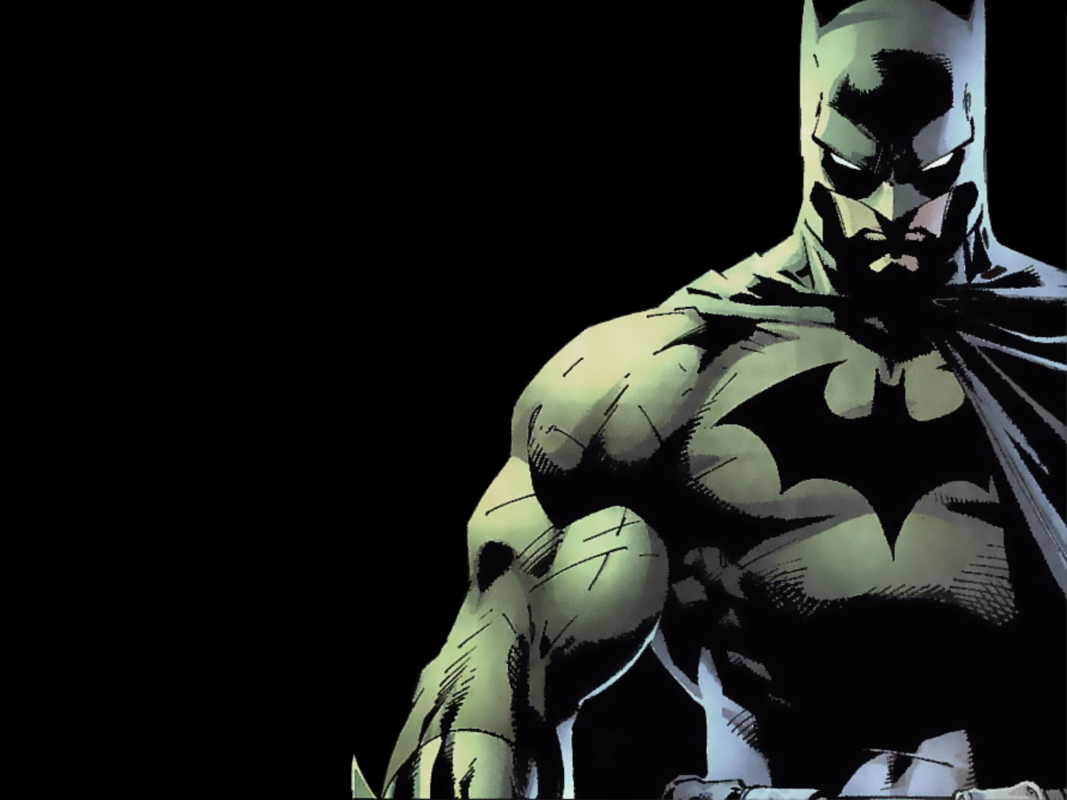
And therein lies the problem; directors don't see their video game-based projects as adaptation of a story so much as adaptation of a toy.  They see a game with a setting and gameplay style they like and decide to use those things to make a movie, without consideration of the fact that they are adapting a work of art that already has a story and characters.  It's like if someone saw a Batman action figure and decided to make a movie about a boy raised by bats in the jungle who grows up to become the villain of a horror flick; you could get it from the basic concept of what Batman is, sure, but you would have to completely disregard the story and character themselves in order to get it, to view Batman as a toy and concept instead of a story and a fully realized work of narrative art.

Come on, with no knowledge of the actual Batman, you know
that mistake could easily be made.  
Until the adapter in question treats video games as a narrative art that is to be legitimately adapted, we will continue to get movies with vague similarities to the games on which they are based instead of actual adaptations of the interactive stories we love.  So it may just largely come down to the eventual cultural acceptance of video games as an art form, combined with their mainstream incorporation to make studios more willing to greenlight films based on more deserving games.  

All this is just analysis and theoretical work, but the main thing to take from it is that there is still hope.  There is nothing that inherently makes game-to-film adaptation impossible, but the cultural relevance and opinion of video games is perhaps not yet to the point where they are particularly likely to succeed.  This is unfortunate, but it is by no means permanent.  When a studio takes a risk and a writer and director respect the game's artistic merits, we will get a good adaptation.  And there will be much rejoicing.  

Remember to "Like" Binary Narrative on Facebook, and I'll see you next week!

Saturday, July 30, 2011

Final Fantasy I: An Exercise in Character/Player Connection


I've written before about the idea that, in order for a game to tell its story well, it must do so in the most interactive way possible.  I don't agree with that.  If you want to know why, feel free to read the article.  Essentially, outside of the extreme danger of the idea that a medium must take advantage of its uniqueness in order to be good, there is an inherent connection between the player and their characters in a game that takes place regardless of any special interactive tricks or even story.  And the best example I've seen so far is the first Final Fantasy.

Yes, this Final Fantasy.
Yes, the one that started it all.  I doubt all that many of you have played it, since most of the franchise's attention these days seems to come from how great/overrated VII was or how amazing/boring XIII was (seriously, each game is so polarizing), but it really is an interesting game.  For one, as a big fan of the franchise, it's interesting to see the relatively simple roots of the series; the gameplay is basic, the story is about as simple as it could be while still moving forward regularly, and the four main characters don't have a single line of dialogue.  Yes, not a single line.

The reason for this is because the game lets you choose which classes you have and what they are all named.  You could have a party made of four black mages if you wanted, and name them Harry Potter, Gandalf, Luke Skywalker, and Twilight Sparkle to live out your magic crossover fanfiction fantasies.  That would be stupid and you would die a lot, but you could do it.  Point is, by allowing the player to choose the characters like this, Square gave up the ability to ascribe particular personalities to them, and as a result the characters themselves are simply a vessel for the player's interaction with the game world rather than the fully-realized and complex characters of later Final Fantasy games.

But you know what interested me most about Final Fantasy?  I loved the characters anyway. Those four warriors of light endeared themselves to me in a way that no other game has; perhaps not as intensely as the more fleshed-out characters of other games, but still in a way that none of those characters have.

Especially this one. Freaking Cait Sith.
I didn't care about their personal struggles, because they didn't have any.  I didn't relate to any of them, because there was nothing to relate to.  And to be honest, the story and world were far too cliche at this point for me to really care about them.  I know this game is responsible for most of those cliches, but the elves live in the city of Elfheim?  Really?  The overall narrative and world of the game was the only thing it had going for it outside of the basic gameplay, and thankfully it kept moving at a good pace and was interesting enough to be engaging, but it was still very simple and was obviously little more than a base on which RPGs have been building for decades since.  Really, the story, world, and characters did very little for me in terms of connecting me to a developed and interesting narrative.

And yet I cared about the characters.  Why?  Simply because they were mine.  These were four warriors that I had chosen and named, that I had essentially created.  I chose their identities, and I led them into battle.  My characters succeeded based on my direction and skill, and they failed when I did.  They grew and leveled up, becoming more and more powerful because I led them to.  When they were upgraded to their more powerful forms by Bahamut, my heart lept, and whenever they were killed in battle, it sank.  In other games I cared when the story put the characters in peril, but in this one I cared about my own actions and its effects on my characters in the context of basic gameplay.  It is far from my favorite Final Fantasy game, but to this day it is still the only one in which I level-ground all my characters up to level 99, because I simply cared to see them succeed.
And this guy?  Hardcore
in the higher levels.
So... where did that come from?  How could I care more about these blank slates on a battle-to-battle basis than the characters that captured my imagination in VII, tugged at my heartstrings in X, and enraptured me in VI?  In the absence of actual characters, the bond between me and those four warriors was solidified by my interaction with them.

You can get quite attached to your
family in Fable II, and this man sure
punches you in the gut for it.
This is one of the base unique things about video games; there is an inherent connection between player and protagonist.  It is the only medium in which one can use the word "I" to refer to the main character of a story.  I remember when I was playing Red Dead Redemption, my girlfriend had not yet played many games (which has been fixed since then, to wondrous results), and she got confused because I said something about how my family was in danger until I did what was required of me.  Now after playing Fable II, she understands; the main character of a video game is your character.  Their identity is defined as much by yours as it is by theirs.  And in the case of a game like the first Final Fantasy, the lack of proper character development just increases the extent to which this is true since almost the only defining element of their identity is yours.  The same concept has been used to large extents with the idea of the Silent Protagonist, but more on that later.

The thing to take from this is that, if games like the first Final Fantasy have anything to say about the storytelling power of video games, it's that interactivity doesn't have to be utilized in full to be effective.  The very existence of interactivity in the context of a story connects the player to the characters in a way non-interactive mediums never could.  As much as it is necessary and encouraged for this medium to find new and exciting ways to use this incredible storytelling tool, we must keep in mind that the very presence of it is enough to tell stories in ways we've never even dreamed.

If you like Binary Narrative, Like it on Facebook!  See you next week!

Saturday, July 23, 2011

Counterpoint: Games Are About Winning, Art is About Experience


I apologize for the lateness; this is what I get for trying to mess with Blogger's HTML to get pullquotes when I've only a basic familiarity with coding.  I know what I'm doing now, so hopefully in the future I can insert pullquotes without severely delaying the articles.

Back in 2006, deservedly revered film critic Roger Ebert spoke out saying that video games were not, and indeed never could be, art (it's a few questions down).  This claim was followed up twice in the following years, once further stating his argument in 2007 then again in 2010, followed soon after by an interesting assertion that he was still right, but never should have brought it up.  If you were a gamer during these times, you no doubt remember the uproar.

Unfortunately, all the responses to this focused on Ebert himself rather than his arguments.  It seemed there were only two responses: seething hatred for the man who dared to make such ignorant statements about something so clearly out of his experience and understanding, and completely writing him off as an old man ranting against a new art form that isn't his.  While the basis for both of these reactions is valid (his statements obviously came from a perspective with very little actual knowledge of video games, and they did seem an awful lot like what theater critics said about film back in the day), the mistake was to focus so much on Ebert himself.  His arguments, though still incorrect, are have some interesting concepts that can help us further understand not only those who object to this medium's artistic legitimacy, but the present and historical development of interactive art.
Ebert's arguments can help us further understand not only those who object to this medium's artistic legitimacy, but the present and historical development of interactive art.
There were two main arguments that Ebert put forth in his arguments.  Both fall into another broader argument; that is, games cannot be art because the nature of a "game" inherently involves certain elements that art must inherently be without.  The two arguments he specifically focuses on within this are 1) video games cannot be art because the game-like nature involves completely different objectives from art, and 2) video games cannot be art because the player has control of the outcome rather than the author. This Counterpoint article will deal with the first argument, and the second will come later. But I would like to strongly specify, this article is not about Roger Ebert.  He is simply a framing device as the man who popularized two of the very few arguments against games as art that actually have legitimate and worthwhile artistic thought behind them. Let's focus on the arguments and the theory behind them, not the man and his motivations and qualifications.

Let's try to grasp this particular argument first.  The best way to do this would be to take a quote from the article itself, in which Ebert is specifically supplying counter-arguments to various quotes given by Kellee Santiago in a TED talk given at USC.
One obvious difference between art and games is that you can win a game. It has rules, points, objectives, and an outcome. Santiago might cite a immersive game without points or rules, but I would say then it ceases to be a game and becomes a representation of a story, a novel, a play, dance, a film. Those are things you cannot win; you can only experience them.
This is a decent summation of Ebert's argument on the matter (if you want more detail, read the full article).  Essentially, games are about using skill and coordination to prevail over the competition, whereas stories are not about "winning" or getting to the end, they are about the experience and the effect it has on you as the reader, viewer, or indeed, player.

Not much winning going on here, but if you didn't cry in
The Land Before Time as a child, you had no soul.  
Admittedly, this is a compelling argument.  After all, I've discussed the difficulties of combining gameplay and narrative in a previous article.  It is not easy; the two do in fact, to some extent, contradict each other in their basic nature.  Games are about performance and competition, not an emotional and intellectual experience designed by an artist.  So when one attempts to combine a game with a narrative, does it legitimately create a work of narrative art, or just a game with a story attached?

In general, the argument fails when it considers video games to be a game with a story tacked on.  Though this does often happen with unfortunate results, it is far from an inherent trait of the medium.  This argument seems to be viewing video games as a checkers board with the cover of Casablanca unceremoniously taped onto the back, when in reality the effect we're going for is more like chemical bonding, where the two elements fuse to become a new thing entirely.

This is a hamster with a knife taped to its back. Not how
videogames combine their elements, though it would
make for an awesome game.
Taking specifically from the quoted paragraph, there are two issues here on which the argument fails.  The first is the term "win."  Ebert is referring to the traditional idea that a game is something where the end goal, the entire purpose of the game, is to overcome the challenges it presents.  The completion of this goal is the entire reason the game was played, and the actions along the way have little value to the game outside of the progress they made toward that goal. And of course, if that goal is not accomplished, the actual events of the game are meaningless, as their value exists only in the context of victory.  Art, on the other hand, is about everything, each and every moment of the experience and everything about it that made it what it is. Stories have an ending, sure, but without experiencing the rest of the story in the way it was specifically designed to be experienced, said ending has absolutely no satisfaction, meaning, or impact.

However, video games are not all like this anymore; some exist, of course, and hopefully always will, but it simply cannot be denied that the medium has largely moved past the idea of "beating the game" to an emphasis on the experience of the game.  The player must prevail over challenges, yes, but this is not toward the purpose of getting to the end as much as it is to progress through the story.  Beyond that, the fact that many games allow the player to make choices affecting nothing but the story seems to imply goals outside of the completion of the game's challenges.  The game may be about overcoming its challenges, but the motivation for prevailing is not the completion of the game, but to see what happens next in the story and bring said story, not just the challenge, to its eventual conclusion.  So really, to claim that the goal of a video game is to get to the end and win is a severe misunderstanding of what the medium is actually about.

The second way in which the argument fails is in the word "representation."  If you remember, he said that a game without rules would cease to be a game and instead be "a representation of a story," implying that the goal that games must attain but can inherently never reach is to be a representation of a story.  Which is something with which I imagine most artists and scholars would agree is the goal of art, in the field of narrative art at least.

Victory is not the entire end goal of a video game, but more of a prerequisite to experience more of the story.
But then the question arises; why can't a game represent a story?  Even in basic game theory there are ideas about sports such as football and games such as chess having a narrative; the only thing keeping them from being "art" is the fact that the end result is created by competition rather than specific artistic intent.  But unlike those games, video games allow the player to try again until victory is accomplished.  This means that victory is not the entire end goal of a video game, but more of a prerequisite to experience more of the story, or even if story is not a focus, more of the game.  Victory is not an end in and of itself, but rather a goal that must be completed for both game and story to move forward.

On a simpler note, can it really be argued that a video game is not a "representation" of a story if it has a story in it?  Regardless of the game-like aspects of a video game, if it has a story that progresses as the player does, is the game not representing a story?  One could say this is just arguing semantics, but it does get to the core of this argument; if a game and story exist within a single work, designed and created by an artist or team of artists, how can it be said the final product is not a representation of a story and, as a result, a work of narrative art?

In the end, this argument is based on a lack of understanding about how games work, and seems to have been made under the impression that modern video games are just more realistic-looking versions of Galaga.  It simply doesn't hold up to informed scrutiny.  However, that is not to say it has no value.  Even to a small degree in this article, it has driven us to consider the nature of a game and the nature of a narrative, how the two naturally both compliment and contradict each other, and what it really means for a game and a story to be combined into a single work.  Many of the present and future articles on this blog explore just such topics.  This is why it is so important to not shrug off these arguments because of their fallacious nature, but instead to consider them and explore why they are wrong and what they can teach us.

See you next week!  Don't forget to "Like" Binary Narrative on Facebook!

Thursday, July 21, 2011

Fun Stuff

Now for a more traditional Wednesday post (I know it's almost Friday; sorry again for this last bit of time): these were meant to just be some random thoughts on games and experiences I've had lately, so here's that.

I was browsing those racks of $5 or less PS2 games at Gamestop and stumbled upon a game I've heard a lot about but never got to play: Killer 7.  I'm kind of excited about this; having not played No More Heroes or its sequel, this will be the first game I play by Suda 51.  Depending on whether it's too weird or delightfully weird for me (my personal preferences tend to vary on that issue), No More Heroes might be bumped up on my priority list a bit.  I've heard plenty about this game and its unique... everything, so I'm very excited to be playing it.  Somewhere in the mix of all the other games I have to play.

With World of Warcraft being free to play until level 20 now, I've decided to give it a go.  I've never been too incredibly interested in the MMO scene, I must admit; as much as I'm sure I would enjoy the genre, I would also be putting a lot of time into it that I could be putting into single-player experiences that have more of the narrative and aesthetic things I appreciate most in games.  But my complete lack of familiarity with the genre is hardly something befitting of one who studies and designs games, so I decided that had to change.  I'm sure I'll have some stuff to say about it on here once I get going on it.

Saturday, July 16, 2011

Busy Busy Busy

I apologize to whatever few regular readers I may have; this last week has been quite the whirlwind.  I will be back on schedule by this next Saturday with what will hopefully prove to be a very interesting article.

Saturday, July 9, 2011

The Other Possible Outcome


There was one thing I thought of while trying to look on the bright side during the months when the supreme court debated the artistic worthiness of video games.  It almost makes me wish I could see what the medium would have been like had censorship prevailed.  Of course it wouldn't be worth it, and you will never, ever catch me saying the Supreme Court made the wrong decision.  The choice they made was absolutely, without question, the only correct one they could have made.  But I do wonder how video game development would have adjusted to a culture that hostile to its most common subject matter: violence.  And I think, if the medium managed to adjust rather than die, perhaps it would not have been all bad.

This is what happens when there's sex and violence
in our movies, kids.  
I liken the avoided video game censorship to the effect McCarthyism had on the film industry in the ate 1940s.  For those unfamiliar with film history, the simple version is that the McCarthy Era involved the blacklisting of many actors, directors, and writers who were suspected to be communists.  Unfortunately, all they really needed to be suspected was to do anything that seemed "Un-American," which included certain very strict moral boundaries.  It was a pretty messed up time, with promising and talented filmmakers losing their careers suddenly when they lost funding and venues.  As a result, movies had to tread carefully.  Mature themes had to be handled without mature content for fear of the blacklist.  Really, it wasn't all that different from the world we imagined were this law to be passed, just with film rather than video games.

The interesting thing about this was that it forced film makers to come up with creative ways to portray things that they couldn't get past the censors.  One of the most notable examples is the use of cigarettes to imply sexual content.  Especially in noir films, two lovers blowing cigarette smoke into each other so the smoke lingers together, or two cigarette butts smoldering in an ash tray, was used as a symbol for sex.  Or consider Hitchcock's Gory Discretion Shots, used before film was allowed to show dismemberment and mutilation.  Though these things are now allowed in film, thus occurring as a result of budget constraints or purposeful filmmaking, they were first developed during a time when more graphic depictions would have fallen under the judgement hammer of censorship.

Even silly games like Castle
Crashers might have problems.
Consider what a similar effect would do for video games. Of course games like Mario and other similarly innocent games would survive this process, but they're generally not what we're talking about when discussing either violence or storytelling.  Gameplay could survive this law, sure, but storytelling as we have developed it within this medium would take a huge hit.  This medium is still almost entirely comprised of stories centered around violence, for various reasons discussed in one of my previous articles.  But what if we couldn't depict that violence anymore?  What if we were forced to do things differently by an unjust                                                                   violation of the first amendment against the medium?

The most obvious effect would likely take place in the horror genre, which has, in the last decade or so, become less "survival horror" and more "gory and occasionally startling action game," much to the ire of many gamers, designers, and critics.  The need to show all the violence would turn into an aversion, and horror games would have to turn to their roots and focus more on psychological horror and playing on the unknown, like classics such as Fatal Frame and Silent Hill 2 or the lesser-known but masterfully terrifying indie game Penumbra.

Sure, this thing is creepy, but what scares you most is
always what you can't see.

But for the industry as a whole, it would mean spreading to genres it has barely touched before. If games cannot explicitly portray violence,  they would have to either portray it implicitly or avoid the subject altogether.  With the vast majority of games, this simply cannot be done.  We would have to start telling stories in different, less violent genres, such as drama and all its sub-genres (romance, courtroom drama, domestic drama, etc.).  This would not be easy, but it is something that must happen eventually, and I think it's fairly clear that progress is slow when it's easy to make money off Shoot Teh Bad Guyz VI: Less Talky Moar Shooty.  But take away the ability to make that, and what are we left with?  No choice but to innovate.

Make sure to thank these guys next
time you play a game.  
So in short, I think it would have been cool to see where the pressure from this law could have taken the industry.  I do not wish the Supreme Court had made a different choice, as the censorship of interactive art (an immensely important and exciting artistic development) could be one of the biggest artistic atrocities in history.  But gaming needs to evolve, and part of me wonders if this could have been the best way to stimulate that evolution.  But thankfully, we can now develop this medium as we like, without threat of censorship.  I hope we'll use it to develop this medium into a truly diverse and effective one.

And no, of course there's no such game as Shoot Teh Bad Guyz VI: Less Talky Moar Shooty. If there was, I would be too busy weeping in the fetal position to be writing this article.