Showing posts with label adaptation. Show all posts

Saturday, September 24, 2011

Adaptation Study: Henry V


Last week, I promised to return to the topic of adapting linear works to interactive media by discussing the possibilities regarding Shakespeare's play, Henry V.  That's a bit of a daunting task, but we'll see how it turns out.

Warning: there will be spoilers.  Though I do assume some familiarity with the play (so the context of some scenes will be missing), this discussion requires talking about specific elements of the story and how they could translate into gameplay, so naturally, if you've somehow managed to miss this story and you don't want it ruined, I recommend you watch one of the many film adaptations (Kenneth Branagh's is quite good) or simply read the text online before reading any further.  Otherwise, let's do this.

This particular play would work in many gameplay genres due to its nature as a war story, since combat is basically gaming's default setting.  It would likely take some interpolation, specifically the addition of various historic battles (since this play is based on actual historical events) besides those portrayed in the text, in order to elongate the game.  This would especially be necessary if this were an action game, since the action genre has little more than simple combat in the way of gameplay; an interesting way to present it in this case might be to present the story from the viewpoint of one of the soldiers, witnessing the events of the play from an outside but involved perspective.  In order to avoid such intense and widespread interpolation just to make the minimally accepted playtime, however, Henry V would more effectively be adapted as an RPG.  While it would be interesting to talk about gameplay and combat mechanics, this site is about storytelling, so let's talk about the story and the mechanics behind it.

Much of the personal conflict in Henry V comes from Henry’s struggle between his responsibilities as an authoritative king and his moral standards, especially those regarding his old friends.  In the story, he makes many difficult decisions along these lines, such as when he hangs his old friend Bardolph for insubordination.  These kinds of choices are exactly the kinds that RPGs thrive on; they will not affect the overall outcome of the story (it is perfectly reasonable to assume that, for instance, had Bardolph not been hanged, the overall story would be largely unaffected), but could have an affect on some of the details and allow the player to shape Henry into the kind of king they want to be.  These types of choices are ideal for a RPG.

In fact, this story lends itself quite easily to a traditional Western RPG model.  For one, RPGs in general are not completely centered on combat; they also include some degree of dialogue (often allowing the player to choose how the player character responds in various conversation events) and miscellaneous sidequesting.  This means that even the non-combat scenes of the text could be interactive to an extent.  For instance, the player could choose how strongly to react to the Dauphin’s insulting message; perhaps Henry could lose his temper and respond violently, reply in a composed but resolute manner, or he could shrink at the idea of war (though of course, for the sake of the story, his reaction would dictate his character more than the story's events, since the war kind of needs to happen).

That's assuming a model similar to Mass Effect's dialogue
wheel; there could very well be more options as well.
These scenarios can provide examples of another Western RPG standard: the morality bar.  However, in this particular case, the spectrum of good to evil may be better represented by a spectrum of friendship to kingship, or maturity to immaturity (which, conveniently, is a bit more clear-cut than morality and thus will lend itself better to this spectrum).  Since Henry’s main conflict in the story seems to be the struggle between his kingly duties and his responsibility to his friends and his personal morality, these themes would be very effective to explore in the context of the story.  This would mean that most of the game’s morally grey decisions would make him either choose his friends and personal comforts at the risk of compromising his leadership and respect, or defy his own needs, loyalties, and indeed his own personal morality in order to be a more effective leader.

However, all these choices fall flat if there is not some sort of impact on the story.  The player must feel like they are shaping things, which will not be accomplished if the story remains unchanged despite their actions.  Again, the nature of this particular story makes this relatively easy to implement.

But we will most certainly not be considering Roger Ebert's
"naked and standing on their hands" comment.
Henry’s placement on the spectrum (be it morality, maturity, leadership, etc.) can affect his standing among his soldiers.  This could be reflected in the types of quests he gets from them, the things they say around him, and could possibly affect the outcome of some minor battles and quests along the way.  The larger outcome of his standing among his troops would be the casualty report after the climactic battle of Agincourt.  If his men grudgingly follow him due to his standing, they may not be so motivated to fight well, and more may die.  If Henry’s standing with his soldiers is abysmal, perhaps the battle could be lost altogether.  Only the highest standing with his men as a leader would produce the extremely low body count presented in the original play text.  The player will have to decide whether it is worth the lives of Henry’s soldiers to retain the friendships and loyalties of his youth.  With very little interpolation, this could even be stretched to represent a choice between Henry’s maturation and his preservation of innocence.

Here, an interesting issue arises.  The insertion of player choice is allowing the story to be changed as the player sees fit, along the lines the developers draw, at least.  Fidelity is being compromised to a large extent, though there would definitely be a story path that could be followed to directly correlate to the story presented in the play text.  Allowing the player to alter the story progression would undoubtedly be a controversial move among Shakespeare scholars.  For that matter, it would require additional dialogue to cover for each option, meaning either some bold writer would need to try and mimic Shakespeare's style or the language would have to be jettisoned entirely.  Indeed, a simpler gameplay genre would make it easier to prioritize fidelity.  An action game, for instance, would allow the story to progress as intended through cutscenes, allowing the player to participate only in the battles, the outcome of which would be fixed.  The only way the player could alter the story would be if Henry died, in which case the game would simply deliver a “game over” screen and start the player back at the most recent checkpoint to give them a chance to do it right this time.

However, that would be overlooking the greatest potential of video games as a medium.  While Henry’s personal struggle can be observed while reading the text, attending a performance, or watching a film adaptation of Henry V, the player of a video game can actually experience this struggle.  Rather than learning from the way in which Henry responds to these pressures, players can learn more about themselves based on the decisions they would personally make in the situations the game puts forth.  As Daniel Floyd said in the Extra Credits episode Enriching Lives, “This is the unique power of games as a medium.  They ask us to live our decisions.  In this medium, we cannot be spectators.  We are forced to confront our own actions, and that forces upon us a level of introspection."

So in the end, it's actually quite possible to make this conversion.  It does take some flexibility; absolute, unshaken fidelity to the source material cannot be the driving force when adapting a linear story to an interactive form, though I'm sure some Shakespeare purists will not be happy about that.  More important than complete fidelity, however, is to take advantage of the storytelling elements and techniques that can only be accomplished through this medium, and in doing so, hopefully offer something to the story and the player that they could not have from non-interactive media.

Hopefully this little brainstorming session has been an interesting read, and perhaps has inspired some further thought into the idea of adaptation into video games.  See you next week!

Wednesday, September 21, 2011

Random Note on Adaptation

There was one example I didn't note in my previous article that really does deserve note.  Not because it's an exceptional example of one of the difficulties I noted in the article, but because it's actually the perfect example of the principle I stated in the first adaptation article.

For those too lazy to click on the link (not judging; I don't blame you), I said that the main reason films based on video games tend to be so awful is the lack of artistic respect for the source material on the part of the film's makers.  This is not very common, however, in adaptation the other way around; a video game based on a story from another medium is usually made to adhere closely to the source or, in the case of some, made because the creator saw potential in a great story.  But this is not always true.

Dante's Inferno is possibly the best (or should I say worst?) example of this in the medium thus far.  I'm not sure what inspired the developers behind this game to make it, but there is very little connection between the game and the classic book from The Divine Comedy (basically, the idea of circles of Hell).  Essentially, the book's concept of Hell is the only thing the game gained from the book outside of, perhaps, a few sales to poor, unwitting literature buffs.

Literature buffs that likely burned the game rather than
unleashing it upon an unsuspecting Gamestop customer.
Not that I would expect anything better from EA, but you know what, Dante's Inferno could possibly make for a very interesting video game.  But the developers simply took the basic, basic concept of the story and made their own, entirely different action game out of it.  This is not respect for the original work; it's not even a legitimate attempt to adapt it.  And that's not okay.

Hopefully we will see more real, legitimate attempts to bring classic stories to interactive media as video games are more widely understood as an artistic medium, but for now, let's do what we can do by supporting the ones that deserve it.  Metro 2033, for instance, is a little-known first-person action/survival horror game based on a Russian novel, and though I have yet to read the novel, I have heard highly positive comments regarding its adaptation.  Plus it's just a really good game.

Saturday, August 6, 2011

Adaptation: From Interactive to Non-Interactive


Apologies for the late posting time; had a bit of a pet-related emergency that took a lot of time and induced a lot of stress.  But now it's up, and I hope you enjoy it.

Many gamers have given up on movies based on video games.  All we've gotten from the practice are a ton of horrible movies and one absolutely awful director, and the few decent films we have gotten weren't terrible, but also weren't actually adaptations of the game, just similar stories with the same name.  

Unfortunately, a common reaction to this fact (and every time a film adaptation of a game is announced) is to exclaim that there will never be a good video game movie because, based on past failures, it's impossible to make one.  However, if you'll allow me to be quite frank, that's stupid.  This is art, dependent on nothing more than a skillful depiction of our own creativity; some things may be difficult, but nothing is impossible.

Artistic sensibilities aside, there are identifiable reasons why these films have not worked, which always means it is possible to improve.  If you can identify the problems, you can work on solutions.  So let's see about identifying some of them.  

If you've played Diablo,
you'll get this picture.
First of all, the interesting thing about adaptation when it comes to video games is that there is an interactive component that must be dealt with.  In the past, all a film adaptation had to deal with was the translation of words into images, or from the single-perspective staging of theater into the multi-angle setup the medium allows.  Granted, these were not easy; each medium has unique properties that others are hard-pressed to incorporate, or sometimes downright impossible.  But none of these elements have ever been so vital to the work as interactivity can be.  It is difficult to portray the words of a book with moving pictures, and it is hard work to accurately adapt the works of Shakespeare to a filmic medium, but at least it can be done.  Interactivity, on the other hand, simply does not exist (at least in any meaningful way) outside of video games.  

This was a compelling choice, but much more so when you
had to make it than it would be if Ethan did it himself.
Now of course for most games, the only effect this has is that which I discussed last week, which really isn't a huge hurdle to overcome.  Interactivity inherently connects the player with their characters in a way passive media does not, but we all know that connection is not required to create a compelling, personally identifiable character; we can all name many characters from film, literature, or theater we are far more connected to than many characters I could also name from video games.  And the fact is, none of the game-based films have had to contend with this much; very few, if any, of the games that have been adapted even had multiple endings, let alone the complex and multifaceted choices found in games like Mass Effect or Heavy Rain.  So really, though this is a problem, it has rarely been confronted, so there is not much to talk about.  

My one recommendation with this is to be creative.  Look at Clannad: the game's main romance has two endings, and the good one is unlocked when you play through all the game's different romance arcs.  The anime based on it (which I highly recommend as long as you don't mind crying like a baby), rather than choosing the good one as canonical, manages to fit both in.  The result is, unfortunately, less than perfect; I had to look up the ending online after watching it to fully understand it.  But it was a valiant effort.  The point is simply that, while interactivity cannot really be a part of film, that does not mean complete linearity is the only option.  Be creative.

However, on to the problems that have been more relevant to video game movies thus far.  The most obvious is that there is yet to be any real talent put into them.  Sure, there will be some noteworthy actors here and there, and it's true that not every director is as bad as Uwe Boll, but in general video games just haven't gotten the same talent behind their movies that literature and theater have.  Thankfully, this one will likely change over time; we live in a world where Kenneth Branagh, famous for directing and acting in Shakespearian film adaptations, directed Thor, a movie based on a Marvel comic.  Considering the parallels between comics and video games in their fight to earn artistic recognition, I think it's safe to say video game films will eventually get their due talent.  

Another big one is that, for some reason, very few of the games that have the narrative strength to do well in a filmic context have actually been adapted.  Why did we get a Bloodrayne movie?  Why is there a movie based on Dungeon Siege?  Where is our Beyond Good and Evil film, our epic Ocarina of Time movie, or that Halo adaptation that was supposed to be made way back when?  These games have good stories and would be pretty naturally adapted to the big screen; so why do we keep getting the non-story-centric games adapted?  

Well, the answer to that one is actually another reason in and of itself; budget.  Studio execs don't seem to see enough money in video game movies to pay the fees necessary to adapt a worthwhile game.  Fox and Universal even turned down the Halo movie based on budget reasons, which I think we can all agree was a very stupid move; of all games to turn down for budget reasons, they really thought a Halo film wouldn't make enough money back?

Though would-be Halo director Neill Blomkamp went on to
make District 9, so I think I can forgive that in the end.  
The unfortunate truth is that films take money to make, especially action-oriented films with heavy requirements for special effects.  Video games exist almost solely in the genre that would require such effects in a film adaptation, so this especially true of them.  However, they are also not particularly respected as art yet, meaning that to most studios, what matters is not so much whether a game makes good artistic sense to adapt to film, but whether they can cheaply acquire the rights and make a profit.  Unfortunately, under these criteria the best candidates for film adaptation are more along the lines of gaming's blockbusters than its artistic triumphs.  

In these ways, many projects have been doomed from the start, but what goes wrong with projects that have real potential?  This is the most important thing about it.  

Anyone adapting a work must have respect for the source material.  Not necessarily a driven desire to be completely faithful to it (prioritizing complete fidelity to the source material above all else is a grave mistake in adaptation), but a genuine desire to see the work done justice within another medium.  Game adaptations have, thus far, lacked this almost entirely.  

A good example was almost the Uncharted movie, which I talked about a bit in one of my smaller Wednesday posts.  In short, director-at-the-time David Russel had planned on making the film about a family that protects important artifacts from those who would steal and abuse them, which any fan of the games can tell you has absolutely nothing to do with Uncharted outside of the involvement of important historical artifacts.  

Thankfully, he was taken off the project due to "creative differences."  Issue being, David Russel wasn't planning on making an Uncharted movie.  He was planning on using the lucrative name of Uncharted to make his own movie with similar themes.  In an interview, he said he respected the source material, but did so noting only the gameplay and cinematic style of the game without a word to the story or characters.    

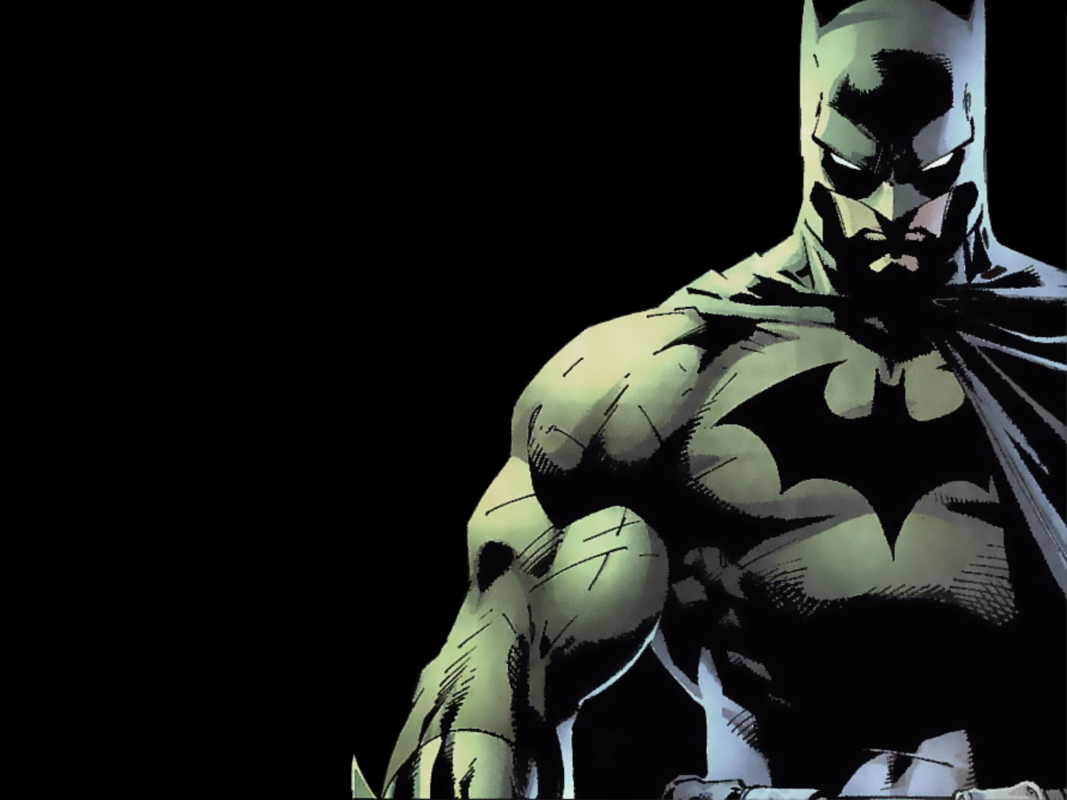
And therein lies the problem; directors don't see their video game-based projects as adaptation of a story so much as adaptation of a toy.  They see a game with a setting and gameplay style they like and decide to use those things to make a movie, without consideration of the fact that they are adapting a work of art that already has a story and characters.  It's like if someone saw a Batman action figure and decided to make a movie about a boy raised by bats in the jungle who grows up to become the villain of a horror flick; you could get it from the basic concept of what Batman is, sure, but you would have to completely disregard the story and character themselves in order to get it, to view Batman as a toy and concept instead of a story and a fully realized work of narrative art.

Come on, with no knowledge of the actual Batman, you know
that mistake could easily be made.  
Until the adapter in question treats video games as a narrative art that is to be legitimately adapted, we will continue to get movies with vague similarities to the games on which they are based instead of actual adaptations of the interactive stories we love.  So it may just largely come down to the eventual cultural acceptance of video games as an art form, combined with their mainstream incorporation to make studios more willing to greenlight films based on more deserving games.  

All this is just analysis and theoretical work, but the main thing to take from it is that there is still hope.  There is nothing that inherently makes game-to-film adaptation impossible, but the cultural relevance and opinion of video games is perhaps not yet to the point where they are particularly likely to succeed.  This is unfortunate, but it is by no means permanent.  When a studio takes a risk and a writer and director respect the game's artistic merits, we will get a good adaptation.  And there will be much rejoicing.  

Remember to "Like" Binary Narrative on Facebook, and I'll see you next week!