Showing posts with label uncharted. Show all posts

Saturday, August 6, 2011

Adaptation: From Interactive to Non-Interactive


Apologies for the late posting time; had a bit of a pet-related emergency that took a lot of time and induced a lot of stress.  But now it's up, and I hope you enjoy it.

Many gamers have given up on movies based on video games.  All we've gotten from the practice are a ton of horrible movies and one absolutely awful director, and the few decent films we have gotten weren't terrible, but also weren't actually adaptations of the game, just similar stories with the same name.  

Unfortunately, a common reaction to this fact (and every time a film adaptation of a game is announced) is to exclaim that there will never be a good video game movie because, based on past failures, it's impossible to make one.  However, if you'll allow me to be quite frank, that's stupid.  This is art, dependent on nothing more than a skillful depiction of our own creativity; some things may be difficult, but nothing is impossible.

Artistic sensibilities aside, there are identifiable reasons why these films have not worked, which always means it is possible to improve.  If you can identify the problems, you can work on solutions.  So let's see about identifying some of them.  

If you've played Diablo,
you'll get this picture.
First of all, the interesting thing about adaptation when it comes to video games is that there is an interactive component that must be dealt with.  In the past, all a film adaptation had to deal with was the translation of words into images, or from the single-perspective staging of theater into the multi-angle setup the medium allows.  Granted, these were not easy; each medium has unique properties that others are hard-pressed to incorporate, or sometimes downright impossible.  But none of these elements have ever been so vital to the work as interactivity can be.  It is difficult to portray the words of a book with moving pictures, and it is hard work to accurately adapt the works of Shakespeare to a filmic medium, but at least it can be done.  Interactivity, on the other hand, simply does not exist (at least in any meaningful way) outside of video games.  

This was a compelling choice, but much more so when you
had to make it than it would be if Ethan did it himself.
Now of course for most games, the only effect this has is that which I discussed last week, which really isn't a huge hurdle to overcome.  Interactivity inherently connects the player with their characters in a way passive media does not, but we all know that connection is not required to create a compelling, personally identifiable character; we can all name many characters from film, literature, or theater we are far more connected to than many characters I could also name from video games.  And the fact is, none of the game-based films have had to contend with this much; very few, if any, of the games that have been adapted even had multiple endings, let alone the complex and multifaceted choices found in games like Mass Effect or Heavy Rain.  So really, though this is a problem, it has rarely been confronted, so there is not much to talk about.  

My one recommendation with this is to be creative.  Look at Clannad: the game's main romance has two endings, and the good one is unlocked when you play through all the game's different romance arcs.  The anime based on it (which I highly recommend as long as you don't mind crying like a baby), rather than choosing the good one as canonical, manages to fit both in.  The result is, unfortunately, less than perfect; I had to look up the ending online after watching it to fully understand it.  But it was a valiant effort.  The point is simply that, while interactivity cannot really be a part of film, that does not mean complete linearity is the only option.  Be creative.

However, on to the problems that have been more relevant to video game movies thus far.  The most obvious is that there is yet to be any real talent put into them.  Sure, there will be some noteworthy actors here and there, and it's true that not every director is as bad as Uwe Boll, but in general video games just haven't gotten the same talent behind their movies that literature and theater have.  Thankfully, this one will likely change over time; we live in a world where Kenneth Branagh, famous for directing and acting in Shakespearian film adaptations, directed Thor, a movie based on a Marvel comic.  Considering the parallels between comics and video games in their fight to earn artistic recognition, I think it's safe to say video game films will eventually get their due talent.  

Another big one is that, for some reason, very few of the games that have the narrative strength to do well in a filmic context have actually been adapted.  Why did we get a Bloodrayne movie?  Why is there a movie based on Dungeon Siege?  Where is our Beyond Good and Evil film, our epic Ocarina of Time movie, or that Halo adaptation that was supposed to be made way back when?  These games have good stories and would be pretty naturally adapted to the big screen; so why do we keep getting the non-story-centric games adapted?  

Well, the answer to that one is actually another reason in and of itself; budget.  Studio execs don't seem to see enough money in video game movies to pay the fees necessary to adapt a worthwhile game.  Fox and Universal even turned down the Halo movie based on budget reasons, which I think we can all agree was a very stupid move; of all games to turn down for budget reasons, they really thought a Halo film wouldn't make enough money back?

Though would-be Halo director Neill Blomkamp went on to
make District 9, so I think I can forgive that in the end.  
The unfortunate truth is that films take money to make, especially action-oriented films with heavy requirements for special effects.  Video games exist almost solely in the genre that would require such effects in a film adaptation, so this especially true of them.  However, they are also not particularly respected as art yet, meaning that to most studios, what matters is not so much whether a game makes good artistic sense to adapt to film, but whether they can cheaply acquire the rights and make a profit.  Unfortunately, under these criteria the best candidates for film adaptation are more along the lines of gaming's blockbusters than its artistic triumphs.  

In these ways, many projects have been doomed from the start, but what goes wrong with projects that have real potential?  This is the most important thing about it.  

Anyone adapting a work must have respect for the source material.  Not necessarily a driven desire to be completely faithful to it (prioritizing complete fidelity to the source material above all else is a grave mistake in adaptation), but a genuine desire to see the work done justice within another medium.  Game adaptations have, thus far, lacked this almost entirely.  

A good example was almost the Uncharted movie, which I talked about a bit in one of my smaller Wednesday posts.  In short, director-at-the-time David Russel had planned on making the film about a family that protects important artifacts from those who would steal and abuse them, which any fan of the games can tell you has absolutely nothing to do with Uncharted outside of the involvement of important historical artifacts.  

Thankfully, he was taken off the project due to "creative differences."  Issue being, David Russel wasn't planning on making an Uncharted movie.  He was planning on using the lucrative name of Uncharted to make his own movie with similar themes.  In an interview, he said he respected the source material, but did so noting only the gameplay and cinematic style of the game without a word to the story or characters.    

And therein lies the problem; directors don't see their video game-based projects as adaptation of a story so much as adaptation of a toy.  They see a game with a setting and gameplay style they like and decide to use those things to make a movie, without consideration of the fact that they are adapting a work of art that already has a story and characters.  It's like if someone saw a Batman action figure and decided to make a movie about a boy raised by bats in the jungle who grows up to become the villain of a horror flick; you could get it from the basic concept of what Batman is, sure, but you would have to completely disregard the story and character themselves in order to get it, to view Batman as a toy and concept instead of a story and a fully realized work of narrative art.
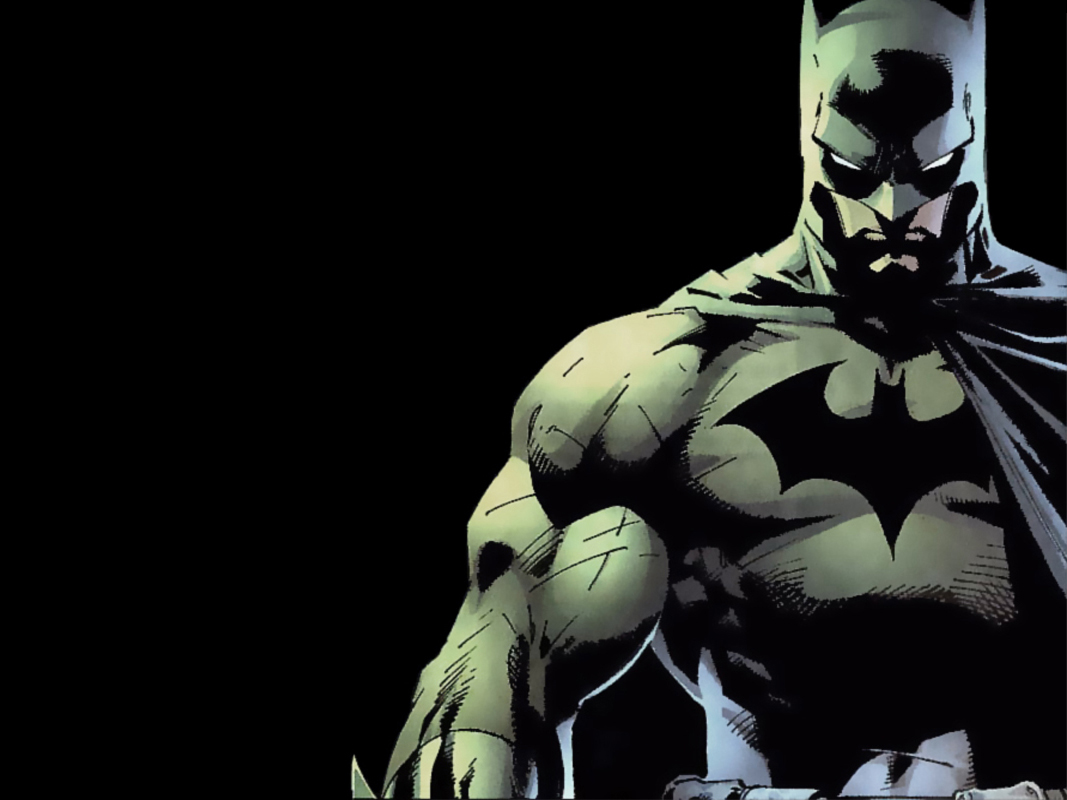
Come on, with no knowledge of the actual Batman, you know
that mistake could easily be made.  
Until the adapter in question treats video games as a narrative art that is to be legitimately adapted, we will continue to get movies with vague similarities to the games on which they are based instead of actual adaptations of the interactive stories we love.  So it may just largely come down to the eventual cultural acceptance of video games as an art form, combined with their mainstream incorporation to make studios more willing to greenlight films based on more deserving games.  

All this is just analysis and theoretical work, but the main thing to take from it is that there is still hope.  There is nothing that inherently makes game-to-film adaptation impossible, but the cultural relevance and opinion of video games is perhaps not yet to the point where they are particularly likely to succeed.  This is unfortunate, but it is by no means permanent.  When a studio takes a risk and a writer and director respect the game's artistic merits, we will get a good adaptation.  And there will be much rejoicing.  

Remember to "Like" Binary Narrative on Facebook, and I'll see you next week!

Saturday, May 14, 2011

The Role of Non-Interactive Storytelling in Interactive Media


Cutscenes have recently become, in the minds of many, the "failure-state" of video game storytelling. People complain that a cutscene interrupts the gameplay experience or takes away an opportunity for varied and interesting gameplay moments. It has gone so far that many have claimed that a game fails in its very artistic value as a game if the focus is anywhere else but the interactivity; if it is taken away or belittled for the sake of the story, the game has failed as an interactive artwork.

It’s true that the most memorable moments in gaming are those where interactivity is used or toyed with in the context of a powerful story moment. The epilogue of Halo: Reach, the famous plot twist in Bioshock, the moments leading up to the infamous death scene in Final Fantasy VII… Many interactive artworks have used interactivity to create impacting moments that truly could not exist in any other medium. And that is awesome.
The final mission of Halo: Reach is the pinnacle of
the series' storytelling.  
However, this idea that non-interactive story movement in an interactive medium is inherently bad storytelling has a problem. A huge problem that most people don’t notice unless, again, they take it to its full logical conclusion. Let’s see where it leads.

So the idea here is that the only good way to tell a story in video games is to use interactivity in everything, that everything must be interactive in some way, because interactivity is the storytelling property entirely unique to video games. Applied to art theory as a whole, this is saying that any given artwork must take full advantage of its medium’s unique properties in order to be good.  Any artwork that breaks from its unique properties is not a good artwork.

To illustrate, let’s apply this specifically to animation, as kind of a sub-medium of film. To clarify, animation is not a genre, but a subset of film itself, capable of telling far too many types of stories to be considered a simple genre. Feel free to comment (and good luck) if you want to make the argument that Cowboy Bebop and Disney's Cinderella both belong in the same genre.

Animation is, within the larger medium of film, uniquely capable of wildly over-the-top imagery and very silly slapstick comedy. It is easier for someone to take violence humorously when it is animated because much of the reality is lost, especially if the animation style is exceptionally quirky. It is visually capable of more silly or just plain weird images than live-action.

What would make for a bad animated feature, then? Well for one, animation that tries to look like reality is out; trying to look real abandons the lack of reality animation can deliver, eliminating the entire uniqueness of animation.  For that matter, if the work is expected to take full advantage of its unique properties, the animation had better take full advantage of that fact.  Any frame where characters are standing and talking is wasted, any scene without constant motion and exaggerated movement is doing it wrong.  In simpler terms, Spongebob Squarepants and Ren and Stimpy are objectively better works of art than Death Note, Avatar: The Last Airbender, or The Lion King.
The pinnacle of
animation, everyone.
Let's apply this logic to video games, since that is the whole point of this blog after all.  The unique property of video games as a medium is interactivity.  Thus, applied to this art theory, a good video game is one that uses interactivity in all its facets and never breaks from delivering an interactive experience.  It delivers a constantly interactive and intense experience, and achieves immersion by keeping the player constantly in control, constantly challenged and involved.  Perhaps aesthetics, graphics, story, music, etc. matter, but all are of minimal importance in comparison.  If the game stops with the interactivity to move a story forward, it loses its immersive quality and stops truly being a "video game."

So, according to this, what would a bad video game look like?  Well, like any of these.


TmsDzJ on Make A Gif, Animated Gifs


To name just a few.

This prioritization of interactivity above all else is not entirely meritless, but I think it's a bit too extreme. The most erroneous aspect is the idea that there's only one way to tell a story well within a given medium, even if that way takes the fullest advantage of the medium's unique capabilities. To say in any artistic venue that one way is the only good way to tell a story is problematic because it discourages creativity and variance, two of the most important things in art. It's essentially telling an entire medium to stick to what it's good at before it even knows what it's really capable of.  The fact is, a good story is a good story.  Sometimes a story in a video game would not have lost much had it been told in a television mini-series, or perhaps a long movie, but that does not make the story bad. Though cutscenes have their benefits, they do not offer anything particularly special to video game storytelling, but that does not mean a good story told by a well-made cutscene is somehow bad.

This idea is really just coming out of the need for video games to claim their spot in the world of artistic media (though some also use it to support the idea that video games should not focus on art and storytelling).  In a previous post, I talked about how, despite the great stories some video games have told, games as a medium are still largely considered to tell worse stories than other mediums, and how this may be in large part due to the fact that video games have explored less of their uniqueness than other, older mediums.  Video games need to explore interactivity and truly come into their own with their ability to effectively wield this unique power, as this is the thing video games can do that no other medium can.  But this is intended to free and empower video games, not to limit them.  As we explore the frontier of this art form, we do not all pack up and move to the newly discovered areas; rather, we expand, settling and exploring the new frontier while still developing what we already know. We do not abandon the older tactics to game development and storytelling as we discover new ones, we use the old knowledge to improve and understand the new, and vice versa.  It is all important.

This is a bit of a heated topic as of late, so feel free to comment or email me with any thoughts, disagreements, or concurrence.  I would like this blog to be discussion-based to an extent, so if you have something to say, please do, and I will make sure to reply, and perhaps bring up your points in a future article.

See you next week, and assuming you don't vehemently disagree with what I've said here, don't forget to Like Binary Narrative on Facebook!