Wednesday, August 31, 2011

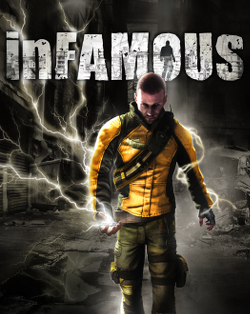
inFamous

Sorry for the lack of article on Saturday; my last semester of college just started, and things have been a bit crazy.

Finally got around to playing inFamous.  I got it during the Welcome Back program and I've been playing other games since then, so I'm just now playing it.  And I am enjoying it quite a bit.

It's unpolished in a way one would expect of a game so ambitious and relatively old in the context of the PS3's life cycle.  My favorite glitch thus far was in the first sewer area when you heal a man, a woman opens the gate and comes through, then the man drops to his knees and yells about how awful life is while the woman looks like she's running, but she's just moving slightly next to the suffering man.  It looked like she was doing some sort of happy dance while this guy screamed in anguish.  I laughed.

From a storytelling perspective, it's an interesting experience in that it seems to put no real effort into character development, but sometimes it seems like it really wants to.  We see some development in Zeke, but only in a few specific little areas.  Cole's girlfriend seems to basically be a non-character, more of a plot device to motivate Cole and offer some quests than an actual character, and yet I think it was supposed to be a really happy moment when she forgives Cole for what happened (it happened like halfway through the game and was more than a little obvious, or I would have warned for spoilers).

This is the most common problem to plague gaming as a narrative medium; it doesn't want to take any more time than necessary to develop the narrative elements.  It'll try to do a good job communicating the plot, but characters take a long time to develop, and that can't be done in gameplay to the same extent that plot can, so in order to preserve the all-too-common "all action and gameplay, all the time" mindset, they develop the plot but don't give the characters their due attention.  Perhaps I'll write a full article on that at some point, but for now it's just an interesting thing I noticed in inFamous.

Wednesday, August 24, 2011

Demon's Souls

After hearing a lot about it since it released, I’m finally getting to play Demon’s Souls, and it’s quite an experience. There’s certainly something to be said for what difficultly brings to a game's atmosphere, which I admit I hadn’t really considered. Most of my past experience when it comes to difficulty interacting with narrative and aesthetics has been in games where the emotion and excitement has built up for the epic battle, and you can't wait to go in and finish this once and for all... then you end up losing all that excitement and emotion over the course of many retries. It’s always been more annoying than anything else, from a storytelling perspective at least, for a game to be punishingly difficult.

However, this is different. Demon’s Souls fills every encounter with such pervasive dread you often feel terrified despite your enemies being, for the most part, not terrifying in the slightest. Demon’s Souls is by no means a horror game, and yet it manages to scare me more than most horror games ever have. I say most to account for the existence of Fatal Frame, which is probably one of the most piss-your-pants terrifying experiences any demented human mind has ever conceived.

But Demon’s Souls rarely dips into horror, and even when it does, it’s directly tied to the one thing that truly makes this game scary; the fact that every encounter, every battle, every enemy might give you the last fight of your life, and a harsh punishment awaits you should you fall to their sword. The atmosphere is intense, and often quite unsettling; I think the highlight was when, in one of the level, you enter a hanging cage and are lowered further down than you could even see from where you were… into a blood-red marsh. But even then, it wasn’t just, “Blood, that’s scary!” The fear that struck my heart and stopped my breath in that moment came from the knowledge that if something down there created that marsh, it could very easily add me to it. And of course, if it did, all my souls (which are used both as currency and experience points to level up) would be lost.


I had never seen this kind of difficulty before. The kind that actually increased the artistic legitimacy of the game in question by filling the atmosphere with a constant awareness that one mistake could mean your death. It’s a very well-designed game, to the point where you rarely ever feel cheated when you die, which helps you fear death rather than get frustrated at it, increasing the tension without making the game unbearable to play.

Just my random thoughts on a very interesting game.  I also just realized its sequel/spiritual successor, Dark Souls, releases in October.  As if I didn't already want more games than I can afford in the coming months...

Saturday, August 20, 2011

DLC and Storytelling


There's been a lot of outrage recently about downloadable content.  People are saying it (or at least certain uses of it) cheats players by charging money for content that should have been available as part of the original game they paid for.  Outside of ridiculous examples such as day 1 DLC, I don't agree with that; I think if the developers want to expand their vision for the game and add more content, players should have no problem dropping ten or fifteen dollars for some extra content in a game they love.  But when it comes to storytelling, there is a troubling trend I have seen as of late: leaving unanswered questions or a vague ending so the DLC can finish it or fill in the blanks.

I just finished Alan Wake, which is an absolutely fantastic game with a compelling narrative and tense atmosphere.  A week or so before I started playing that, I finished Castlevania: Lords of Shadow, which isn't quite as good and really failed as a Castlevania game, but is still a very strong title overall.  The former seems to revel in the loose ends at its conclusion.  The latter resolves everything, then has an epilogue that seems to completely ignore the ending of the story and does not explain what happened to so drastically change the outcome of the story.  In both cases, the answers were in two episodes of downloadable content.

Now when it comes to gameplay, a game is expected to deliver a certain amount of gameplay depending on its genre.  For mainstream action games, it's at least 8-10 hours.  For older JRPGs it's at least 20, and for newer ones it's more like 40+.  Open-ended western RPGs are expected to require at least 40 hours and offer 100+.  The idea that these minimum times dictate how much money the game is worth is severely misguided, as shorter games like Portal display, but the point is that a given game usually offers the expected amount of gameplay and a good progression of power and challenge, assuming it's not just a terrible game; the game itself is complete.  So when it comes to gameplay, DLC is essentially a way to add a few hours to the game and hopefully provide some thrilling new situations.  It's not all that it is really capable of, but outside of simple in-game items or weapons, it's pretty much all it's been used for.

The story works in a very similar way.  It's fine for DLC to expand on the story; provide a side mission with an interesting story like the Assassin's Creed games, add an optional character like in Mass Effect 2, or simply provide a bit more insight into the story's events.  But regardless of what DLC adds to a story, it should always do just that: add.  Never should DLC complete a story, because the story should already be complete within the game itself.  Sure, maybe some details can be added or expanded in DLC, but the story should be perfectly understandable and complete just as the game ships.

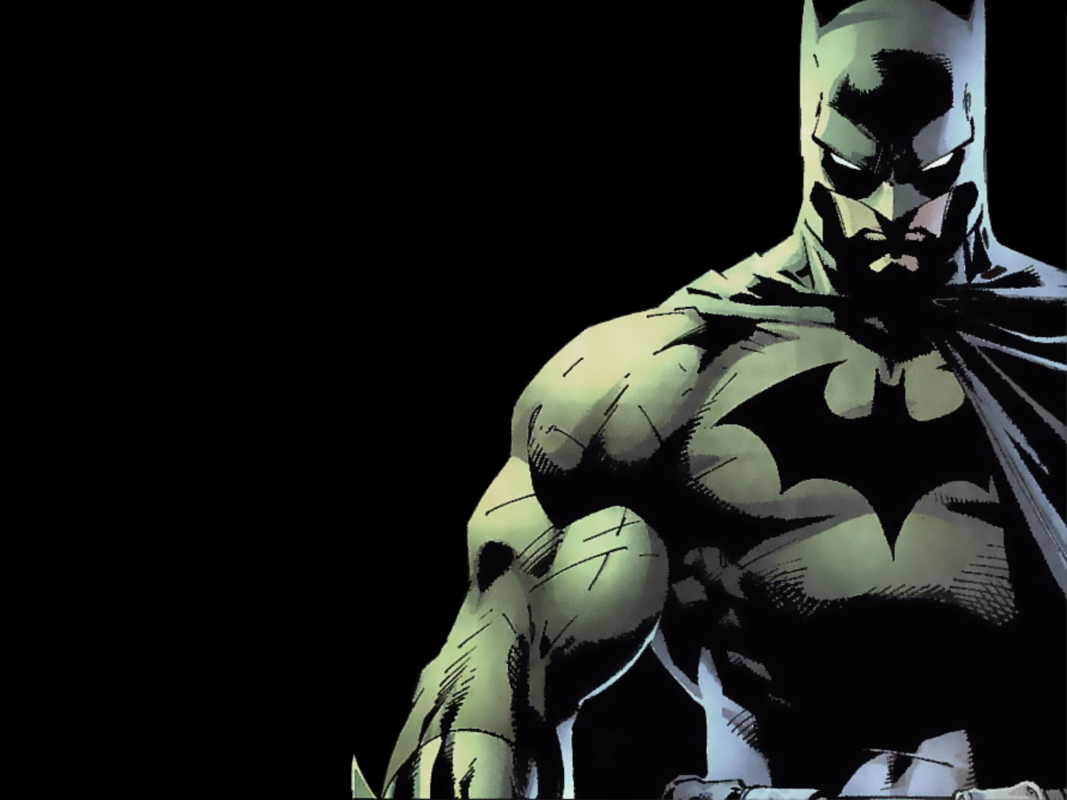
Imagine if this was done in any other medium.  Imagine if The Dark Knight Rises told its story over two and a half hours, but ended on a cliffhanger and declared that there were two half-hour DVDs for sale for $5, and buying them would reveal how the story ends.  What would happen then?

This.

It would not be okay.  No one would let that fly.  People would buy it, sure, because it's freaking Batman and they need to know how it ends, but the amount of absolute, seething hatred that would be directed toward everyone involved in the film simply would not be worth it.  People would boycott future projects and, in the long run, revenue would go down exponentially.  So why is this somehow acceptable in the world of video games and online content?

I think the only real reason is that we are dealing with a new medium, both with video games themselves and with the ability to offer content easily over the internet.  We are still learning how to use this new technology within a medium that itself is still relatively new.  It only makes sense that things like release patterns and marketing would undergo a growth period before they can truly be used effectively.  But while this lack of full comprehension of the medium and distributing technology makes it more understandable, it is no excuse.

We're smarter than that.  

Downloadable content has a great purpose; the ability to add content to a game without releasing another full-fledged game is great.  It is capable of releasing small, inexpensive extensions to games that we love, or even release games in short episodes (actual episodic release, not Valve episodic release).  The possibilities are awesome.  But we, as gamers, are used to situations where people try new things, even when they just piss us off.  As games gain more cultural respect and mainstream attention, hopefully the same group that would hate this situation in film will also hate it in video games, and publishers will be required to shape up and respect their customers.

I know I've said little here that hasn't been said before, but while this trend has existed in gameplay, it's unsettling to me to see it begin in the area of storytelling.  Let's hope this doesn't become a common occurrence.

If you agree, like Binary Narrative on Facebook, and I'll see you next week.

Wednesday, August 17, 2011

Minor Narrative Interaction

As promised in my last post, here are a few games I recommend to see good use of Minor Narrative Interaction.  Some are obvious, and some less so.  These games make good use of interactivity without making the entire story hinge on the interactive elements and the player's input, and they do a very good job of increasing emotional impact and character empathy through these techniques (though for the sake of spoilers, I won't describe exactly how).  There are more that belong on this list, of course, but these are some particularly good examples.  If you feel there is another game that should have been included, feel free to say why in the comments!

Bioshock
If you're interested in games as a narrative art enough to be reading this blog in the first place, you probably know what I'm talking about.  Bioshock has not only a fantastic twist in the story, but it presents said twist in a unique way that not only emotionally involves the player through excellent use of minor narrative interaction, but hammers the point home like a railway spike straight to your intellect.  A truly brilliant moment in a truly brilliant game that must be experienced.

Beyond Good and Evil
The final boss fight of this game is one of the best examples I've seen of symbolism in actual gameplay.  The controls during the final battle very accurately reflect the struggles of the protagonist and her state of mind at the time in a rather brilliant way.  It's rare to see a game play with the controls to give meaning to even the game's basic control scheme.

Final Fantasy X
I mentioned this in the actual article.  Final Fantasy has a bit of a reputation among some for not involving interactivity at all, for just being long stretches of gameplay punctuated by cutscenes.  For one, that's not true.  Secondly, there's no reason those stretches of gameplay can't be great examples of minor narrative interaction.  This game takes a normal gameplay sequence and, through emotional music and the weight of responsibility on the player, makes the entire process a battle within you between the desire to leave and the need, from both the game and the story, to continue on.

Shadow of the Colossus
The death of a colossus in this game is not a triumphant or exciting experience.  The battle is epic and exhilarating  but once you have killed them, the magnificent beast falls to the ground, life pouring from it, as tragically beautiful music plays.  It's a beautiful moment that evokes more sorrow than triumph.  Seems kind of weird, seeing as killing these colossi are the key to reviving your dead loved one.  But it will all make sense in the emotional ending, in which your efforts certainly make the scene more impacting than yelling at an onscreen character ever could.

Friday, August 12, 2011

Major and Minor Narrative Interaction


These concepts are hardly new, but much like the Narrative/Gameplay Paradigm, this article is my attempt to label and define these two concepts and explore how they work.

It's important to keep in mind that the dramatic story-altering forms of interactivity employed by developers such as Bethesda and Bioware are not the only way to use interactivity in meaningful ways.  It's great to be able to shape the entirety of the story's protagonist, or determine the course of events as the story progresses, but it would be a mistake to think that is the only way for video games to convey their narrative through the unique lens of interactivity.

I'm going to separate interactive storytelling techniques into two categories; there could be many more, obviously, but as a first step let's keep it simple.

The first is major narrative interaction.  This is interactivity on a major scale, the kind of interactivity that allows the player to have a large impact on the game's characters, story, and world.  When you make a decision in Mass Effect that carries over to its sequel and affects its events, that is an instance of major narrative interaction.  This kind of interactivity focuses on letting the player have control and putting the story and characters in their hands.  The player is allowed to choose the type of experience they want based on the options given them by the developer.

The second category is minor narrative interaction.  This is the more subtle use of interactivity, the one that doesn't have any real effect on the story or characters of a given game.  This is what's used at the end of Shadow of the Colossus, the end of Halo: Reach, the plot twist in Bioshock, the final walk to Zanarkand in Final Fantasy X, and the nuclear bomb in Call of Duty 4: Modern Warfare.  Most examples are rather spoileriffic, so I can't describe specific examples without ruining some truly amazing moments, but hopefully you be familiar with at least one of the moments I named.  The basic idea of these is that they put the player in control for an important story point that will not change based on the player's interaction, but the emotional impact and even the story's main points are hammered home in a way that cannot be accomplished without that interactive element.

Major narrative interaction is often the only recognized form of interactive storytelling.  Understandably, the most thrilling potential for interactive narrative is the ability for the player to actively help shape the story and characters, to make important decisions that could take the story in different directions.  The involvement of the player in the artistic experience is an important and exciting development in the arts, and we rightfully have a desire to explore it to its furthest potential.

However, it is important that we not overlook the importance of minor narrative interaction.  This type of interaction does not allow the player to shape the story, at least not in any huge way, but rather endeavors to quite literally put the player in the place of the protagonist, to walk a mile in their shoes so to speak.  In well-crafted uses of minor narrative interaction, the player's actions (or lack of ability to interact in a certain way) reflect the struggle of the protagonist in a way that increases the player's sympathy and emotional connection to the character and events.

It sure added a lot to Crisis Core.  No Final Fantasy VII
fan kept dry eyes at the end of this game.  
A classic example of minor character interaction is at the end of a story, often a prequel starring a different character, when they have their last stand.  Enemies pour in from all sides, and more come no matter how many you kill, until eventually your character is overpowered and falls in battle.  This concept is far from new; it has happened in all sorts of stories.  But there's something different about playing it and actually experiencing that lack of control.  You can fight all you like, kill as many enemies as you want.  You could be the best player in the known world, and you will eventually lose.  Despite all you've been through, all the good your character has done in the game's world and story, it comes to an end here, and you can't do anything about it despite your best efforts.

Some games have also made your character, under the control of some unknown force, do something neither they nor you want them to do, and whatever buttons you press, they only bring the character closer to this action, never stopping them.  Or perhaps rather than putting the death of the final boss after your epic boss fight in a cutscene, the game allows you to deliver the final blow yourself.  Some games have even forced the player to do or watch terrible things, such as the controversial No Russian level in Modern Warfare 2.  These are seemingly small touches, but they really add a lot to the emotional impact; the player feels a sense of responsibility when this interaction is present, and for them to fail when in control, even if the game allows no other course of action, is a far more emotional experience than seeing a character fail in a story.

I've often seen people consider major narrative interaction to be the only type of interaction that truly separates video games from other media.  But as important as major narrative interaction is, it is not the only important or even the most important type of interaction when it comes to interactive storytelling.  Major narrative interaction is great, and very important, but it requires a large financial commitment, a lot of manpower, and the type of story that lends itself to multiple branching paths.  Minor narrative interaction, on the other hand, is not only easier on the workers and the money, but can also apply to every type of narrative imaginable.  This is because it does not demand non-linearity, but instead works to achieve heightened emotional impact regardless of whether the narrative branches.

In short, it's important to consider both major and minor narrative interaction when studying a given work of interactive art.  Too often a game is condemned for having no real interactive value simply because of its lack of major narrative interaction, despite having a strong presence of minor narrative interaction, and recognition of both types is vital to truly understanding how interactivity and story work together in this medium.

On Wednesday I'll post a list of games I recommend checking out to see good examples of minor narrative interaction.  I imagine some people will agree and some will disagree with what I'm saying here, so feel free to comment and let me know!  Until then, remember to like Binary Narrative on Facebook if you like what I have to say!

Saturday, August 6, 2011

Adaptation: From Interactive to Non-Interactive


Apologies for the late posting time; had a bit of a pet-related emergency that took a lot of time and induced a lot of stress.  But now it's up, and I hope you enjoy it.

Many gamers have given up on movies based on video games.  All we've gotten from the practice are a ton of horrible movies and one absolutely awful director, and the few decent films we have gotten weren't terrible, but also weren't actually adaptations of the game, just similar stories with the same name.  

Unfortunately, a common reaction to this fact (and every time a film adaptation of a game is announced) is to exclaim that there will never be a good video game movie because, based on past failures, it's impossible to make one.  However, if you'll allow me to be quite frank, that's stupid.  This is art, dependent on nothing more than a skillful depiction of our own creativity; some things may be difficult, but nothing is impossible.

Artistic sensibilities aside, there are identifiable reasons why these films have not worked, which always means it is possible to improve.  If you can identify the problems, you can work on solutions.  So let's see about identifying some of them.  

If you've played Diablo,
you'll get this picture.
First of all, the interesting thing about adaptation when it comes to video games is that there is an interactive component that must be dealt with.  In the past, all a film adaptation had to deal with was the translation of words into images, or from the single-perspective staging of theater into the multi-angle setup the medium allows.  Granted, these were not easy; each medium has unique properties that others are hard-pressed to incorporate, or sometimes downright impossible.  But none of these elements have ever been so vital to the work as interactivity can be.  It is difficult to portray the words of a book with moving pictures, and it is hard work to accurately adapt the works of Shakespeare to a filmic medium, but at least it can be done.  Interactivity, on the other hand, simply does not exist (at least in any meaningful way) outside of video games.  

This was a compelling choice, but much more so when you
had to make it than it would be if Ethan did it himself.
Now of course for most games, the only effect this has is that which I discussed last week, which really isn't a huge hurdle to overcome.  Interactivity inherently connects the player with their characters in a way passive media does not, but we all know that connection is not required to create a compelling, personally identifiable character; we can all name many characters from film, literature, or theater we are far more connected to than many characters I could also name from video games.  And the fact is, none of the game-based films have had to contend with this much; very few, if any, of the games that have been adapted even had multiple endings, let alone the complex and multifaceted choices found in games like Mass Effect or Heavy Rain.  So really, though this is a problem, it has rarely been confronted, so there is not much to talk about.  

My one recommendation with this is to be creative.  Look at Clannad: the game's main romance has two endings, and the good one is unlocked when you play through all the game's different romance arcs.  The anime based on it (which I highly recommend as long as you don't mind crying like a baby), rather than choosing the good one as canonical, manages to fit both in.  The result is, unfortunately, less than perfect; I had to look up the ending online after watching it to fully understand it.  But it was a valiant effort.  The point is simply that, while interactivity cannot really be a part of film, that does not mean complete linearity is the only option.  Be creative.

However, on to the problems that have been more relevant to video game movies thus far.  The most obvious is that there is yet to be any real talent put into them.  Sure, there will be some noteworthy actors here and there, and it's true that not every director is as bad as Uwe Boll, but in general video games just haven't gotten the same talent behind their movies that literature and theater have.  Thankfully, this one will likely change over time; we live in a world where Kenneth Branagh, famous for directing and acting in Shakespearian film adaptations, directed Thor, a movie based on a Marvel comic.  Considering the parallels between comics and video games in their fight to earn artistic recognition, I think it's safe to say video game films will eventually get their due talent.  

Another big one is that, for some reason, very few of the games that have the narrative strength to do well in a filmic context have actually been adapted.  Why did we get a Bloodrayne movie?  Why is there a movie based on Dungeon Siege?  Where is our Beyond Good and Evil film, our epic Ocarina of Time movie, or that Halo adaptation that was supposed to be made way back when?  These games have good stories and would be pretty naturally adapted to the big screen; so why do we keep getting the non-story-centric games adapted?  

Well, the answer to that one is actually another reason in and of itself; budget.  Studio execs don't seem to see enough money in video game movies to pay the fees necessary to adapt a worthwhile game.  Fox and Universal even turned down the Halo movie based on budget reasons, which I think we can all agree was a very stupid move; of all games to turn down for budget reasons, they really thought a Halo film wouldn't make enough money back?

Though would-be Halo director Neill Blomkamp went on to
make District 9, so I think I can forgive that in the end.  
The unfortunate truth is that films take money to make, especially action-oriented films with heavy requirements for special effects.  Video games exist almost solely in the genre that would require such effects in a film adaptation, so this especially true of them.  However, they are also not particularly respected as art yet, meaning that to most studios, what matters is not so much whether a game makes good artistic sense to adapt to film, but whether they can cheaply acquire the rights and make a profit.  Unfortunately, under these criteria the best candidates for film adaptation are more along the lines of gaming's blockbusters than its artistic triumphs.  

In these ways, many projects have been doomed from the start, but what goes wrong with projects that have real potential?  This is the most important thing about it.  

Anyone adapting a work must have respect for the source material.  Not necessarily a driven desire to be completely faithful to it (prioritizing complete fidelity to the source material above all else is a grave mistake in adaptation), but a genuine desire to see the work done justice within another medium.  Game adaptations have, thus far, lacked this almost entirely.  

A good example was almost the Uncharted movie, which I talked about a bit in one of my smaller Wednesday posts.  In short, director-at-the-time David Russel had planned on making the film about a family that protects important artifacts from those who would steal and abuse them, which any fan of the games can tell you has absolutely nothing to do with Uncharted outside of the involvement of important historical artifacts.  

Thankfully, he was taken off the project due to "creative differences."  Issue being, David Russel wasn't planning on making an Uncharted movie.  He was planning on using the lucrative name of Uncharted to make his own movie with similar themes.  In an interview, he said he respected the source material, but did so noting only the gameplay and cinematic style of the game without a word to the story or characters.    

And therein lies the problem; directors don't see their video game-based projects as adaptation of a story so much as adaptation of a toy.  They see a game with a setting and gameplay style they like and decide to use those things to make a movie, without consideration of the fact that they are adapting a work of art that already has a story and characters.  It's like if someone saw a Batman action figure and decided to make a movie about a boy raised by bats in the jungle who grows up to become the villain of a horror flick; you could get it from the basic concept of what Batman is, sure, but you would have to completely disregard the story and character themselves in order to get it, to view Batman as a toy and concept instead of a story and a fully realized work of narrative art.

Come on, with no knowledge of the actual Batman, you know
that mistake could easily be made.  
Until the adapter in question treats video games as a narrative art that is to be legitimately adapted, we will continue to get movies with vague similarities to the games on which they are based instead of actual adaptations of the interactive stories we love.  So it may just largely come down to the eventual cultural acceptance of video games as an art form, combined with their mainstream incorporation to make studios more willing to greenlight films based on more deserving games.  

All this is just analysis and theoretical work, but the main thing to take from it is that there is still hope.  There is nothing that inherently makes game-to-film adaptation impossible, but the cultural relevance and opinion of video games is perhaps not yet to the point where they are particularly likely to succeed.  This is unfortunate, but it is by no means permanent.  When a studio takes a risk and a writer and director respect the game's artistic merits, we will get a good adaptation.  And there will be much rejoicing.  

Remember to "Like" Binary Narrative on Facebook, and I'll see you next week!