Wednesday, June 8, 2011

E3 Thoughts

I admit I tend to get very hyped for things from which I expect greatness.  I get really into the stories I enjoy, and it's easy to get me excited for more.  So E3 tends to be a ridiculous flurry of excitement and fanboyism for me when a few games I really care about are released.  This post is heavy with Youtube videos, so be warned.

For instance, Halo: Anniversary.  I know the Halo games get a lot of hate nowdays (maybe later I'll go into why I think most of it is entirely unfounded), but the series has a special place in my heart.  Halo: Combat Evolved may not have been the first game I ever loved (that honor goes to Crash Bandicoot 2: Cortex Strikes Back), but it was the first game I ever loved for more than just its entertainment value.  It had an awesome sci-fi war story with a great plot twist, a deep mythology, and a intricately-crafted atmosphere enhanced by one of gaming's best soundtracks.  None of the games since have quite lived up to Halo's campaign (though some would understandably argue Reach's superiority), but I still love the series all the same.  I am hesitant now that Bungie's not making it, but 343 really looks like they love the series and know what they're doing, so the announcement of Halo 4 got me excited, and the stuff about Halo: Anniversary has me downright giddy.


A new Fable game... I'll have to see.  I really liked Fable II, and I would have liked III equally had it not ripped almost everything directly from its predecessor.  I'd probably buy (definitely at least rent) a Fable 4, but if this turns out to just be some sort of simple motion distraction in the Fable universe like it kind of looks, I'll pass.


The Assassin's Creed: Revelations trailer was really, really, really good.  It tells me little else about the game itself, but I'm one of the few, it would seem, who sees immense value in cinematic trailers.  It may not say much about the gameplay, and it's true that the makers could be trying to misrepresent the game, but in an established series like Assassin's Creed, a quality cinematic trailer tells me their focus on the story and its presentation stands strong, and that's enough to get me excited.  Plus, it's Assassin's Creed: worst case scenario in terms of the gameplay, it's not different enough from the already-awesome gameplay of the last two games.  I can live with that complaint.


Speaking of cinematic trailers, I cannot stress enough that any Star Wars fan must see the new trailer for The Old Republic.  If you're not a Star Wars fan, I weep for you.  That's all I can really say about it; just watch it and stand in awe as I did.


I was actually impressed with Nintendo.  I know a lot of people will be crying "gimmick," as they always do when something innovative happens, but even the Wii had potential.  The problem was that it has been squandered and misused, not that it has no potential for greatness.  The fact that the WiiU (admittedly a really stupid name, but at least it doesn't lend itself as easily to dirty jokes) is getting some of the releases currently on the 360 and PS3 says a lot about its ability to keep up.  I'm hesitant, but hopeful.  Also, the Skyward Sword trailer was fantastic, and I'm always happy about the other classic Nintendo franchises as well.


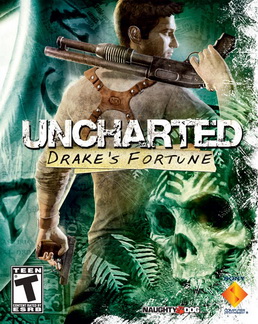
Uncharted 3 looks fantastic.  The new trailer really got me excited, and really, all you need to tell me is that there's more Uncharted and I'm there.  But it actually looks like a bit more of a personal story, which I wouldn't mind at all.  Other than that, Sony didn't have much that caught my eye, though the TV that eliminates split-screen by having both players see different things on the same screen somehow is more than a little impressive.


I admit to not having played a Tomb Raider game in my life.  The last few have looked very interesting, but not interesting enough to take precedence over the games I really, really wanted.  My poor little wallet couldn't take any more.  Before the recent games, I was kind of driven away from the games being little more than a pair of giant breasts shooting things; Lara's sexualization has always been a spot of shame on this medium, in my opinion.  Which is why I love the trailer for the next Tomb Raider game.  By going into Lara's past, they're allowing a lot more room for character development and good storytelling, and they really seem to be humanizing Lara instead of making her an unstoppable sex goddess (and thus staying closer to the intent of her original design).  And the humanization and development of once-exploited characters is something I definitely approve of.


On a more depressing note, it looks like Spyro the Dragon is set to have his once-good name splattered in feces again.  Seriously, someday I will buy the rights to both Spyro and Crash Bandicoot and bring those franchises back to glory, because this is just awful.


Unfortunately, my internet connection kind of sucks, so I haven't had a chance to see some of the stuff, let alone the full press conferences; I still need to browse some of the trailers for new games, I still need to see the trailers for Modern Warfare 3, Battlefield 3, and a few other games I'm interested in.  I'll update this post if anything else really catches my attention.

Saturday, June 4, 2011

L.A. Noire and the Narrative/Gameplay Paradigm


I know I just reviewed this game, but it did things that merit some discussion beyond what I could do in a review, so here we go.

L.A. Noire did some very interesting things.  It created a pitch-perfect noir atmosphere to go along with its detailed recreation of 1940s Los Angeles, which is enough to make it worth playing in the first place.  It also made me curious as to when the word "noir" had an "e" on the end of it.  But its greatest accomplishment came by way of its technology for recording the faces of actors.

Nothing against you, Phoenix.  I still
love your games.  
I can imagine the cries of "Graphics whore!" I may get for that statement, but there's more to it than that.  The facial animations of L.A. Noire allowed it to take some of the game-like elements out of the gameplay and replace it with a sort of real activity.  Rather than watching meters or playing a silly minigame, or even cross-referencing Phoenix Wright style, the expressive faces in L.A. Noire allowed the gameplay to work off actual observation.  This required the player to judge the truthfulness of suspects and witnesses based on their visual and verbal cues, something that is much more difficult, complicated, and realistic than comparing notes or pressing the right buttons at the right time.  It allowed the gameplay and story to mesh on a deeper level by removing the game-like elements that normally govern the player's interaction and, to some extent, separate the player from the game world.  It managed to defy the Narrative/Gameplay Paradigm on which I previously wrote.  But it did not do it fully or perfectly.  L.A. Noire did many things right and was groundbreaking on many levels, but what exactly did they do right and what did they do wrong?  What are these breakthroughs truly capable of, and where could they go that this game did not?

First of all, let me preface this discussion by saying I am not suggesting that all games should avoid game-like elements, or even that games must do so to tell a story well.  I've seen many people say that the "games as art" movement wants to see all games become abstract, boring experiences full of meaning but entirely void of entertainment or challenge.  However, I think I've made it clear that I consider many different games, from Shadow of the Colossus to Halo, to be great works of art; the concepts I discuss in this article aren't blanket suggestions to be applied to video games as a whole, but interesting possibilities for the future of what the medium will be able to do.  In this particular case, L.A. Noire offers a new way to eliminate black-and-white gameplay elements and instead present an experience that, while perhaps is not a "game" by traditional definition, it more of an interactive storytelling experience.

The interrogation process in L.A. Noire is, in its basic form, almost entirely devoid of "gamification," if you will excuse the use of the term in this context.  The idea of actually watching and listening for signs of lying or hesitance is exactly how real interrogations go, not an objective-based, formulaic system by which the player solves some sort of puzzle. This was fantastic, as it eliminated the certainty that most games depend on.  The player could not have a simple logical process of elimination or success at a simple challenge, they had to read the character's voice and face and trust their judgement.  Most people I know, myself included, took a while to get used to it.  It is far more abstract and less concrete than most gameplay processes; it was based on the player's judgement, not on quickness, not on coordination, not even fully on observation.  And if you don't get all the information out of the witness, you move on with the clues you have and hope you haven't missed anything too important.  If the investigations and interrogations go poorly, it is even possible to arrest the wrong person.  This process lacks certainty, lacks the sense of absolute victory that we gamers are used to; but so does the real-life process L.A. Noire emulates.

The amount of emotion the human face can convey is
astounding, and L.A. Noire emulates it well enough to
base its main gameplay feature around it.  

At least it would be like this, if not for a simple but important gameplay element; the chime that tells you whether you have chosen the best reaction.

In the interrogations in L.A. Noire, the player immediately knows whether they "won" or "lost," which unfortunately goes a long way toward invalidating the advancements the game makes.  The player should, as the in-story detective does, feel like they've done their best, like they have uncovered all the clues to the best of their ability and gotten as much information through questioning as they could.  The player should blame the suspect, not themselves, if they got no good information, because as far as the detective knows he did his absolute best.  If the police chief gets angry at them for putting the wrong person away, the player should be surprised and frustrated at their failure rather than simply saying, "Yeah, I did really screw up those last few interviews..."  The uncertainty that should mark each answer, each reaction, each question, is negated by the absolute knowledge of the player's success or failure.

The crazy thing is that the game's story is structured in such a way that this can feasibly be done with little extra effort (the only thing that may have to go would be achievements based on correct questions, but even that would only be for difficulty reasons).  Who gets arrested usually either doesn't matter in the long run or happens because they run or something, proving their own guilt enough to warrant the arrest.  In a few particular cases, the story dictates that the convicted person is innocent anyway, regardless of who it is.  It's not like the designers would have had to code in tons of different endings or events based on the player's success or failure; the player is led to an arrest regardless.  This would not negate the role of statistics; the game could give the player their information and statistics at the end of each case, so the player knows how well they did afterwards and how to do things differently if they play it again.

This is not to say I don't understand why they did what they did.  Absolute knowledge of our objectives, victories, and losses is something we, as gamers, are used to.  We were already far out of our element with these interrogations, and this made it a little easier for us, made the interrogations less frustrating (at least in the way gamers traditionally define frustration).  Unfortunately, this positive effect came at the cost of immersion.  Not that L.A. Noire wasn't immersive (I think a game that faithfully recreated 1940s Los Angeles is immersive by default, to some extent), but it could have become much more so if not for the constant reminder that this is a game, and we just totally bombed that question.  We, as gamers, must be willing and excited to get out of our comfort zones and abandon the security of traditional game design in order for video games to move forward in artistic viability and cultural impact.


This is the main thing I meant in my review when I said I hoped for a sequel that refined and expanded the revolutionary gameplay elements L.A. Noire introduced.  I would like to see this potential franchise develop these concepts into more of a storytelling experience than a traditional game; not because it makes for a bad game, but because the impact could be exponentially increased if the security of formulaic gameplay were further removed from the story and investigations.

I'd be incredibly surprised if everyone agreed with me on this, so feel free to post your arguments, agreements, or random observations, and make sure to Like Binary Narrative on Facebook if you don't hate my ideas!

Wednesday, June 1, 2011

Games Into Movies

So apparently David Russell, the set writer/director of the upcoming film adaptation of Naughty Dog's Uncharted games, has left the project.  This is reportedly due to "creative differences on the project."  I assume that's the nice way of saying, "Sony wanted an actual adaptation of Uncharted, not just a movie named after it."

For those not in the loop, Uncharted is a series of games (soon to be a trilogy) exclusive to the PS3.  They are developed my Naughty Dog, the previous creator of the Crash Bandicoot and Jak and Daxter games (the good Crash games, not the recent ones).  The series follows the adventures of Nathan Drake, a treasure hunter who believes himself to be a descendant of the explorer Sir Francis Drake, as he searches for ancient treasures and protects them from being delivered into the wrong hands.  Essentially, the series is a very well-produced, technologically and artistically impressive interactive equivalent to Indiana Jones.  And it's awesome.  I know some people don't like it, but each title has been well-received critically and commercially, and the series is one of my personal reasons for owning a PS3 (the others are Heavy Rain and Metal Gear Solid 4; other than that it's basically just my Blu-ray player).

So naturally, I'm actually happy about this.  It means if we get an Uncharted movie, it may actually be a movie based on Uncharted.  When I heard about how Russell envisioned the film as similar to The Sopranos, saying it's about "a crime family that metes out justice in the world of art and antiquities," I wasn't particularly happy.  Because that's not what the game is about at all.  That is, as most game-to-movie adaptations tend to be, some guy making up his own story and using the profitable name of a video game.  That's not okay, I'm tired of it, and I hope whoever picks it up actually respects the source material. I know Russell said he enjoys playing it and has respect for it, but he followed that by saying he had to create "another amazing world that's more cinematic."  That should be a huge red flag for any adaptation of anything, but for these games, out of all games, that statement simply is not valid (particularly the word "cinematic").  If you've played them you know what I mean.  


He should be Drake, gorramit!
It also looks like Mark Wahlberg will be reconsidered as well, which I am happy about because, as much as I'm sure he would do well, I'm glad Nathan Fillion may get another chance at a role he simply belongs in.  Yes, I admit to being an avid Nathan Fillion fan, I like pretty much everything he's been in, and Drake looks very similar to him (though perhaps a bit younger), not to mention Nolan North (Drake's voice actor) sounds almost exactly like Fillion.  

Game-to-film adaptation (adaptation in general, for that matter) is a complex issue; you can bet a full article will be coming on the subject at some point, and there will be much to discuss.

In other news, the delay of both The Last Guardian and the high definition Ico/Shadow of the Colossus Collection gives me sad, but I look forward to the resulting more highly-polished final products.  That said, I will be listening to the Shadow of the Colossus soundtrack constantly until I can finally play one of the most epic games ever made in HD.

Saturday, May 28, 2011

EarthBound: A Modern-Day Storybook - Part 2


Here is the second part of Wesley Rea's analysis of Earthbound.  Enjoy!

A Modern-Day Storybook (Part #2 - Story)

In recent weeks, I have been working at an elementary school as a part of an after-school program.  During this time, when I am not helping students with understanding the basics of electricity or assisting them with their multiplication and long division, I have perused various children’s books that are available to the students I teach.  Some are witty, some are boring, and some are simply too strange for any rational person to understand.

And yet, despite these differences, they have the unified element of a story.  However vague the descriptions may be or outlandish the premise is, they are designed to get children to read and to (hopefully) think critically and imaginatively.  As I mentioned last week when discussing the art and music of EarthBound, this game contains many elements that capture the spirit of childhood in a storybook-like way that is attractive to both children and adults, and the story only further reinforces this claim.

While one can go down many different rabbit trails concerning the story of EarthBound, I have identified at least two reasons as to why EarthBound is this “modern-day storybook” I have mentioned and why it encapsulates our childhood dreams so well.


Simplicity

In Japan, EarthBound is written completely in the hiragana script (consisting of about 48 characters) rather than kanji (which has about 2,000+ characters).  Without getting too much into linguistics, one simply needs to remember that hiragana is a syllable-based alphabet, in which each symbol has a particular syllable sound attached to it.  This is done to (presumably) make the games easier for children to understand, as it is easily read and best emulates spoken Japanese in text format (much like how the Pokémon games in Japanese favor syllable scripts over kanji).

The beauty behind this rational choice of language scripts is that it allows the person playing to become more immersed in the experience.  It overcomes the struggle of having to decipher difficult words and allows the children to zip through the dialogue at a pace that closely resembles a speaking pace.  It also leaves many ideas or plot developments simple and intentionally vague at times (due to the limitations of the script), which allows for the player to interpret text that might seem unclear.

While this does not translate perfectly into English, the localization team did a superb job in trying to emulate the humor and wit of the Japanese version by injecting as much American humor and pop-culture references as they could (which, given that EarthBound is based on American culture, worked surprisingly well).

From the time I’ve spent on the game, it has also been clear to me that a lot of the English game itself, like its Japanese counterpart, tells the story with simple language that children can understand.  Characters speak American English, not the King James English that was prevalent in the Dragon Quest games at the time.  They are straight and to the point, telling the player what they need to know and leaving the rest up to the player’s interpretation of what they have been told.  While this is normal in RPGs, EarthBound has a way of making you feel that you are the child that you are playing as, since adult characters tend to talk down to you in a way that is diminutive and which treats you like… well, a child.

This is how the plot unfolds from start to finish.  At the beginning, you are simply dropped into this adventure and are given very clear directions about what you are supposed to do, but in-between fulfilling that ultimate goal, the rest is up to you and what you feel is necessary.  As any good RPG does, it makes players really feel like they are Ness, having to go from town to town asking questions, solving problems, and ultimately trying to figure out how to achieve the goal that has been thrust upon them.

In essence: You, as the player, take on the role of the child character, and you effectively become that child.  You mature along with Ness as he journeys throughout his world, discovering new things during this adventure that you have never learned before, and sometimes even making mistakes that you have to learn from.  The simple act of growing up and living life is heavily emphasized throughout the game in a way that will make children think about their own lives and cause adults to remember how it was for them. In that way, it truly is a storybook that both young and old alike can enjoy.

Relevancy


The setting for EarthBound is, quite frankly, one that is both bizarre and yet strikingly familiar to those of us living in America (especially if we grew up in the suburbs).  The story takes place in the year 199X in a country called Eagleland that is clearly influenced by American culture and ideals (though admittedly toned down a bit from the previous game in the series).  Ness is not a knight, mage, or thief, but is instead a young, normal boy with a penchant for baseball bats and yo-yos.  To a game that is marketed specifically towards children, what could be more relevant than presenting the player with a character that is, essentially, them?

As the story is set up in the beginning, the player (as Ness) finds that they must embark on an adventure, one that will involve having to travel past the confines of their hometown into a world that they have never seen firsthand.  To a child, the idea of traveling to strange, new places is exciting and adventurous, so one can immediately see why such a premise in a game that takes place in the modern-day would be very interesting to the children playing it.  It allows them to travel beyond the bounds of whatever environment they are in so that they can see strange, new things.  

The child, in essence, travels alongside Ness on his journey and learns everything concurrently with him.  One can even say that Ness, as the silent protagonist in the same vein as Link from The Legend of Zelda, is the “avatar” through which the child imposes their personality onto the main character as they travel and experience these new things.  This gives them a feeling of control that they might never be able to experience.  Since normal storybooks typically have characters with set personalities and dialogue, they do not give the reader that feeling of control or personalization that they can get from controlling what is essentially a “digital self.”  This can make the experience more immersive and engaging than any normal storybook can achieve.

While this is all well and good for the children, it is often overlooked that adults can garner a very similar experience that children have when playing games like EarthBound.  The adult is unique in this sense because they, unlike the child, have experienced life in much of its richness and discovery.  This can lead the adult to becoming disillusioned with adventures and new things because they know what happens when those adventures are finished and those new things are discovered.

However, when you give the adult a chance to play something like EarthBound, it can, all of a sudden, awaken those childhood desires and the imagination they used to have.  This places them back into that state of childhood and allows them a chance to essentially “relive” a portion of their childhood in some small way.  They are playing as a child, not as themselves, and must, paradoxically, “rediscover things for the first time.”  They get to put on those glasses of innocence and renew that sense of discovery and taste for adventure that they once had, and relive that time of maturing and growing up.  In this way, they can develop a further appreciation for where they have came from and how they have gotten to this point in their lives, and perhaps even take some of those childlike ideas and senses that they have forgotten and apply them to their adulthood.

Honestly, how much more relevant can you get than the experience of life itself?


Concluding Thoughts

In essence, I believe that it is fitting to refer to EarthBound as a modern-day storybook that can be enjoyed by children and adults alike.  Through the utilization of the music, art, and engaging story, children can be drawn into the game because it is immediately accessible to where they are at in their development as human beings.  Likewise, adults who have already garnered life experience can find something worthwhile in EarthBound because it allows them to relive those times of innocence and discovery that they might not necessarily get in their adult lives, which can inspire them to embrace once again those ideals of their childhood and find how to apply them in their vocation and relationships with others.

I would like to again thank Thaius for allowing me to write these articles for his blog.  It has been a pleasure to do so, and I hope that it will inspire somebody to check out EarthBound for the first time, and to help long-time players of EarthBound to once again pick up that Super Nintendo controller and relive their days of traveling as Ness.

Until next time… keep dreamin’.


[All screenshots in this article came from Moby Games’ page for EarthBound. The logo, picture of Clay Ness, and sprite of Ness giving the victory sign came from starmen.net.]

Wednesday, May 25, 2011

Review: L.A. Noire


Sorry for the delay, but here is my review of L.A. Noire.


This is most definitely an interesting piece.  Rockstar, the creators of Grand Theft Auto and Red Dead Redemption, set out with L.A. Noire to create the interactive equivalent of film noir, the genre to which black-and-white detective films such as The Big Sleep, Out of the Past (which I was delighted to see is actually playing in theaters across the game world of L.A. Noire), and The Maltese Falcon belong (if you've not seen any of those, I highly recommend you do).  In typical Rockstar fashion, they did so by recreating the entire city of Los Angeles as it may have appeared in 1940, because they like doing a lot of work.  Once again, that painstakingly detailed torture they have put themselves through has worked; though far from perfect, L.A. Noire is a fantastic example of interactive storytelling and investigative gameplay.

Rockstar hit the film noir, hard-boiled detective feel
directly on the head.  
L.A. Noire tells the story of Cole Phelps, a former marine who now serves as a policeman in the streets of L.A.  The game follows his rise to glory in the LAPD as he begins uncovering many levels of corruption within the system through his work in the homicide, vice, and arson departments.  Though the story takes a while to go from disconnected cases to a unified metanarrative, it covers a lot of ground, involving several twists, mysteries, and fascinating characters, and is truly entertaining and impacting in many ways.  Unfortunately, it largely fails in its depiction of the main character.  The picture of Cole that is given to the player in the first half of the game is suddenly and dramatically altered about halfway through, and since we get next to no understanding of his personal life outside of the occasional war flashback, there doesn't seem to be any good reason for it.  It implies character depth without actually developing any.  But the story just runs with it and expects us to accept it, culminating in a jumbled character journey for the protagonist that stands out as the jagged piece of gravel in the bed of polished gems that is L.A. Noire's story.  This does not ruin the story - it is still an exceptional and well-written tale that expertly mimics its filmic inspiration - but it does leave a rather empty feeling by the end (though that could be argued to be the point, considering the genre, but Cole's lack of real development made it ring hollow to me).

L.A. Noire has a particular visual element that really does define the rest of the game.  The game generally looks good, nothing to write home about, but the hugely publicized facial technology in the game creates some of the most realistic faces yet to appear in gaming.  This is accomplished by filming an actor from many angles with HD cameras to capture every little facial movement.  I think I agree with David Cage that the technology is a temporary solution, but that does not change the fact that it is really freaking impressive.  This does mean that the facial textures aren't quite as detailed as they could be (you won't be seeing the pore-revealing detail of experiences like Heavy Rain), but that hardly matters; the eye twitches, eyebrow movements, and subtle facial cues are extremely impressive, and they allow the game to do things we can expect to influence the industry for a long time to come.

Actor John Noble on the left, and his character in
L.A. Noire, Leland Monroe, on the right.  Yeah.  
The obvious thing this technology allows is easier connection to the characters.  They just seem more human than they may have without the detailed facial expressions, and everyone has a completely different face since they were all taken from real actors.  There is a level of non-verbal acting that has rarely been possible in a video game, allowing characters to make a strong impression even in only a few minutes of screen time.

However, the biggest effect of the L.A. Noire's technology is the ability to base gameplay not on systems and rules, but on observation of voices and faces.  This manifests itself in interrogation sequences not unlike Phoenix Wright's courtroom sequences in some ways, but much more dynamic.  Rather than simply scrolling through the character's words and finding contradictions or weak spots, the player must actively and carefully watch the character for signs of lying or discomfort.  The player must decide to believe or doubt the person being questioned, or if there is evidence that directly contradicts something they can simply accuse the person of lying and present the evidence to back them into a corner.  This creates an interesting and realistic experience that would not have been possible without the detailed facial movements, and has interesting implications for how video games can create non-combat-related gameplay.  There are also real consequences for messing up these interrogations, such as missing a vital clue or even charging the wrong person, making the game worth playing over to see what changes if less mistakes are made.  This often leads to frustration, as the answer is not always apparent, but there is always one right answer, and a chime lets you know if you got it right or wrong.  But once you get used to using facial cues rather than systematized rules to progress, it gets much easier and a lot more interesting.

In fact, combat and other action-oriented sequences take up a surprisingly small portion of the L.A. Noire experience.  Driving is a large part of the game, obviously, and high-speed pursuits, while sometimes frustrating, are exhilarating and no less of a spectacle than a well-directed chase scene in an action film.  Similarly entertaining is the ability to turn your siren on at any given time and cruise down the street while the good citizens clear your way.  Mostly, at least; sometimes the drivers in this game seem like complete idiots, and stop signs in 1940s L.A. definitely don't work quite like they do today if the A.I. traffic are any indication.  But still, the driving is great and the pulse-poundingly intense car chases never fail to impress.

In all seriousness, why does Rockstar insist on RB/R1 as
taking cover?  It just doesn't work as well as a face button.
Shootouts are the most disappointing part of the gameplay, but they are definitely not terrible, and they are a small enough part of the experience that it will not have much of a negative impact on your experience.  The cover system is similar to that found in Red Dead Redemption, but it is actually more clunky and difficult to accurately control.  I would often try to round cover or switch to the other side of a doorway, only to find myself standing in the path of a bunch of bullets instead of actually moving anywhere.  What's more, the right trigger both fires your weapon and makes you run.  You can imagine the confusion that tends to cause, aside from the fact that it severely limits the application of both actions.  In addition, the game's painstaking attention to detail falls a short here; namely, there is no way to take someone alive in a shootout.  You must always kill them.  For what the game is, this adoption of straightforward shooter rules seems a bit out of place.  If the game spent more time on shootouts I might take bigger issue with their shortcomings, but in the 25+ hours of gameplay I only spent about 2-3 of those hours in combat, so it's really not a huge deal.

The city of Los Angeles is absolutely huge, and the player will spend a lot of time traversing it.  Many landmarks have been faithfully recreated and can be discovered, and the architecture, music, and 95 specific types of cars from the time period and location have been perfectly recreated to make the atmosphere of the game spot-on.  The world definitely seems inhabited as well, with many people walking the streets and even talking about recent events such as Cole's cases.  There is even an option to play the game in black and white, a feature I turned on a few hours in and never went back; it made the entire game feel like I was playing a classic movie.  Exploring the city is fun not only because of the atmosphere, but because there are a total of 40 street crimes that will be called in on the radio every so often.  These are short and simple, usually consisting of a shootout or car chase, and can occur anytime you are driving around the city.

All in all, L.A. Noire is a game that stands as an example of what gaming can be, and though it wobbles a bit with the steps it takes forward, new ground is being covered and is well worth exploring.  Considering Take Two has said the game's sales make it a "powerful new franchise," here's hoping to a sequel where they can iron out the wrinkles and further develop the game's more groundbreaking elements.

Saturday, May 21, 2011

EarthBound: A Modern-Day Storybook - Part 1


Today is a day of two firsts for Binary Narrative.  For one, today's article is the first of many future articles that perform a literary analysis of a specific work of interactive fiction.  I hope to do many of these from time to time, maintaining my anti-spoiler policy as much as possible, of course.  Secondly, for the first time we have a guest writer.  My colleague Wesley Rea has written a two-part, spoiler-free analysis of a classic RPG. I hope you enjoy it!


A Modern-Day Storybook (Part #1 – Art and Music)

If you were like me as a child, you adored spending indeterminate amounts of time wallowing in the adventures contained within children’s books.  As kids, we could not help but dream of that life that we thought was possible; that life of super heroism, intrigue, mystery, action, etc., where we were the commanders of our destiny and the writers of our lives.  As we grow older and realize that our childhood dreams were the stuff of mere fancy and impossible thinking, we still cannot help but hold out that sliver of hope that all of those fantastic adventures we read about as children could actually happen in our grown-up lives.  This has certainly been the case for me, and undoubtedly is the same for many of you readers.

EarthBound is the game that I personally feel captures this spirit of our childhood that no other game since then has been able to do.  In it, one will find a modern-day storybook written for both children and adults to enjoy.  I feel that the game accomplishes this through the use of its unique child-like art style, the musical choices made that invokes nostalgia, and a story that manages to take every trope of our childhood dreams and weave them together into a masterpiece understandable to any generation. For the purpose of this blog post, I will only be covering the art style and music, and will leave the story portion for a future post.


The Art Style


When one first glances at the artwork in EarthBound, they might think of it as childish and amateur.  While this may be true to an extent, it does not automatically follow that this is actually a bad thing.  I feel that this was a specific design choice made on the part of the artists’ in order to evoke a particular child-likeness and simplicity, not unlike how the Peanuts comic strips had a simple art style in order for the reader to understand what life looked like through the eyes of a child.

Considering that the game itself was marketed towards children and/or those coming out of childhood in the first place, it makes sense that the graphical style might mirror, in some way, the types of things they were used to: namely, children’s books and comic strips.  It is an easily accessible art style to them because it is what they have become accustomed to seeing.  In this way, it is something that is uniquely childlike, but that does not mean it is necessarily childish.


As one plays through the game, it is clear to see that these “simple graphics” are not as simple as they first appear.  As you start from your house in Onett and make your way through the many other locales featured in the game (not the least of which being a sprawling seaport), the graphical style gets increasingly more intricately detailed, differentiating between blades of grass, types of flowers, tree roots, the slight cracks in stone walls, and on and on it goes.  It is plain to see that the art style in EarthBound is not merely one of simplicity, but is one that finds the beauty of simplicity amidst the complex.  On the whole, it seems simplistic, but the deeper you dig into it, the more complex parts start becoming more apparent, to the point where everything starts becoming more… alive.

Which, incidentally, is exactly how a child views the world. Anybody who has been around a small, talking child for more than a few minutes knows the type of curiosity they possess, and their incessant way of asking, “Why?” to every explanation only reinforces their view that the world is alive and full of things to discover.  This is what I felt when playing EarthBound, that this sprawling world is alive and full of things for me to go and discover.  I feel that the art was designed so masterfully and purposefully in order to achieve this desired effect within people, which goes to show just how ingrained this childlike sense of wonder and discovery is in our minds, even as we grow older.


The Music

Personally speaking, if there was one single soundtrack that I could have playing throughout my life, the one for EarthBound would be it.  I cannot recall any other soundtrack to anything being so simple, yet so multi-faceted to encompass any particular feeling one has.  While there are not many songs that one could describe as “epic” in the game, I feel that the beauty of the soundtrack has to do with, strangely enough, its lack of desire to be truly monumental and earth shattering.  It finds its functionality within the limited framework of the Super Nintendo sound chip and does what it does pragmatically, but not without invoking that sense of nostalgia within the listener.

It is always hard to describe the sensation one gets when listening to a particular piece of music.  From my own standpoint, I can maintain that the emotions that well up within me when I hear particular instrument sounds or melodic patterns are subjectively beautiful.  To others, that same music may sound like incessant noise with no beauty present at all.  I cannot fault others for not sharing the same musical tastes as myself, so I can only invite others to try to enter into my shoes and hear what I hear and see if they agree or not.

From the very beginning of the game, the sounds of the surrounding environment are important to the atmosphere.  While there are pieces of battle music present within the prologue, it is mostly the noise of the outside environment that sets the mood for the player.  After the prologue, the first piece of music that we hear as Ness walks outside into the sunlight is “Let the Adventure Begin” (also known as the theme song of Onett, Ness’ home town).


This sets the stage for all of the music that comes afterwards.  This is the first piece that truly has to grab you and pull you into the story, and from my standpoint, I think it does an amazing job.  The title alone indicates that this is going to be the start of the adventure of a lifetime, and what an adventure it turns out to be.

I could go on and on for many, many pages worth of my thoughts and opinions on the music of EarthBound, but I will leave off with only one more song for the reader’s listening pleasure.  It is entitled “Smiles and Tears,” and is one of the end-game songs.  Without getting into spoilers, I can definitely assure you that the story to this game has its fair share of both smiles and tears for the player to experience and enjoy, and this song perfectly captures the bittersweet nature of the themes present in the plot of this game.


The very nature of this song is designed for you to feel nostalgic and make you remember everything you have experienced in the game thus far.  Your hopes. Your dreams. Your friends. Your family. Everything.

I have gone on long enough for now, so I will leave the discussion of the story of EarthBound for an upcoming second part of this series.  Big thanks to Thaius for giving me this chance to write about something that is near and dear to my heart.

Until next time… keep smilin’.

[All images came from starmen.net, one of the largest EarthBound fan websites on the internet today. The YouTube videos are not mine, so credit and thanks go to the uploaders and, most importantly, the composers of the music and designers of the games.]

Wednesday, May 18, 2011

RPGs and PS2 Voice Acting

Mid-week I'll be writing a less formal post.  Just some random thoughts on game-related things, current events in the industry, or perhaps an occasional review, rather than a structured article about specifically narrative-related principles.

In the void before L.A. Noire releases (I know it did the day before this post, but I'll only be picking it up today due to a busy schedule) I've been catching up on some games I own but have yet to play.  The first of this is Rogue Galaxy, a Japanese RPG on the PS2 developed by Level 5.  It's a stylish little game, with awesome cel-shading and a cool space pirate theme going on, similar to Skies of Arcadia or Treasure Planet.  It really does look fantastic, especially for a PS2 game.  I had started it way back when I got it, many years ago, but got stuck on a difficult part and got more games.  You know how it is.

Now that I've played more RPGs I can definitely see some of the more derivative aspects of Rogue Galaxy's plot, though it's not so typical as to be boring.  It's a pretty cool story, and the characters are quite interesting as long as you can appreciate the Japanese storytelling/writing style.  Being a huge JRPG and anime fan myself, I'm definitely enjoying it.

One thing I find interesting about the PS2 though is how many games have that awkward voice acting.  Many of you probably know what I'm talking about; it's not necessarily anything about the voice acting itself, but that unnatural pause during the in-engine cutscenes.  I'm not sure exactly what causes it; it's probably something to do with the game engine and its ability to load character motions and dialogue or something, I suppose, though it doesn't happen in all PS2 in-engine cutscenes.  It's heavily present in Rogue Galaxy at times.  It's also responsible for most of the complaints about the voice acting in Final Fantasy X, in my opinion; the voice acting itself wasn't bad (well, for the most part), but that awkward pause between so many lines of dialogue just made the pacing of conversations seem off.

If anything, it's an interesting example of how game technology has affected the medium's ability to tell stories.  Not that it couldn't tell stories well before voice acting could be perfected; some of gaming's best stories were told before voice acting was even within reach of the medium.  But it is one of many ways video games have developed in a kind of backwards manner.  The medium gravitated immediately to the action-packed, effects-heavy kinds of stories that film had to technologically advance to first.  This is largely because of the Narrative/Gameplay Paradigm, I would say, but also because technology allowed us to tell those types of stories right from the get-go, so we skipped the acting, writing, and even technological development to skip straight to the 'splodies.  Nothing wrong with 'splodies, but I think that explains a lot of the narrative deficits present in the medium.

Anyway, food for thought.  Perhaps I'll review L.A. Noire next week if I finish it in time.